
Frogs, a diverse group of tailless amphibians, exhibit an astonishing array of morphological and physiological adaptations that allow them to thrive in a wide range of environments, from aquatic habitats
to dry land, and even underground or in trees. These adaptations are crucial for their survival, enabling them to catch prey, escape predators, regulate body temperature, and conserve water. Their unique features, such as specialized skin, powerful limbs, and acute senses, underscore their evolutionary success as environmental generalists and specialists.
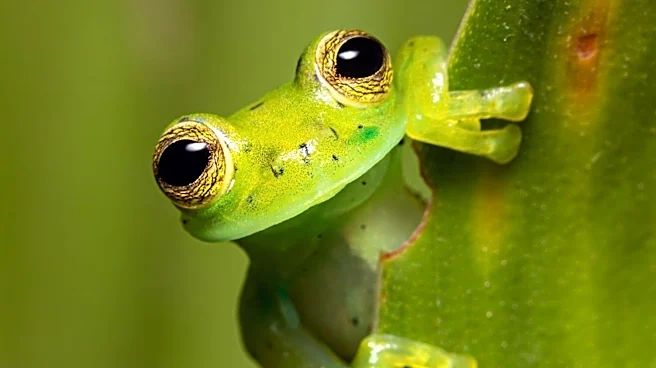
Adult frogs typically possess a stout body, protruding eyes, and an anteriorly-attached tongue. Unlike their larval stage, they have no tail. Their limbs are folded underneath their bodies, and they lack claws. Frog skin is glandular, producing secretions that can range from distasteful to highly toxic, serving as a defense mechanism. Skin coloration varies greatly, from well-camouflaged dappled browns, grays, and greens to vivid patterns of bright red or yellow and black, which act as aposematic signals to warn predators of their toxicity. As their skin is semi-permeable, making them susceptible to dehydration, frogs either inhabit moist niches or have developed special adaptations to cope with drier conditions.
Specialized Limbs for Varied Lifestyles
The structure of a frog's feet and legs is intimately linked to its habitat. Whether a species lives primarily on the ground, in water, in trees, or in burrows dictates the specific adaptations of its limbs. Most adult anurans have four fingers on their hands and five toes on their feet, though the smallest species may have vestigial digits. Frogs must move quickly to secure food and evade threats, and their musculoskeletal system is largely modified for this purpose. The tibia, fibula, and tarsals in the hind limbs, along with the radius and ulna in the forelimbs, are fused into single, strong bones to absorb the impact of landing after a jump. The metatarsals are elongated, increasing leg length and allowing for a longer push against the ground during takeoff. In specialized jumpers like ranids and hylids, the ilium is elongated and forms a mobile joint with the sacrum, acting as an additional limb joint to enhance jumping power. The tail vertebrae are fused into a urostyle, retracted inside the pelvis, which helps transfer force from the legs to the body during a leap.
The muscular system has undergone similar modifications. While ancestral frogs likely had opposing muscle pairs for limb movement, modern frogs have almost all muscles adapted for jumping, with only a few small muscles remaining for returning the limb to its starting position and maintaining posture. These muscles are significantly enlarged, with the main leg muscles accounting for over 17% of a frog's total mass. Webbed feet are common, with the degree of webbing directly correlating to the amount of time a species spends in water. For instance, the fully aquatic African dwarf frog has completely webbed toes, while the arboreal White's tree frog has only partially webbed feet. Flying frogs, however, also possess fully webbed toes, which they use for gliding. Arboreal frogs also feature pads on their toe ends for gripping vertical surfaces. These are not suction pads but consist of columnar cells with flat tops and small, mucus-lubricated gaps, allowing adhesion to irregularities on surfaces. Some arboreal frogs also have an "intercalary structure" on each toe to increase surface area, and hip joints that permit both hopping and walking. Ground-dwelling frogs generally lack extensive webbing or large toe pads. Burrowing frogs, such as Couch's spadefoot, have a keratinized tubercle, or "spade," on their hind feet to aid in digging.
Skin: A Multifunctional Organ
A frog's skin is a remarkably versatile organ, serving protective, respiratory, and water-absorbing functions, as well as aiding in thermoregulation. It is rich in glands, particularly on the head and back, which often exude distasteful or toxic substances. These secretions are frequently sticky, helping to keep the skin moist, protecting against molds and bacteria, and making the frog slippery to escape predators. The skin is shed every few weeks, usually splitting down the middle of the back and across the belly, after which the frog typically eats the sloughed skin.
As cold-blooded animals, frogs employ behavioral strategies to regulate their body temperature. They can move into sunlight or onto warm surfaces to heat up, or seek shade and adopt a posture that minimizes exposed skin to cool down or prevent water loss. This water-conserving posture involves squatting close to the substrate with hands and feet tucked under the chin and body. Skin color also plays a role in thermoregulation; it darkens in cool, damp conditions and lightens on hot, dry days. The grey foam-nest tree frog can even turn white to minimize overheating. Many frogs can absorb water and oxygen directly through their skin, especially around the pelvic area. However, this permeability also makes them vulnerable to water loss. Mucus glands across the body help maintain skin moisture and reduce evaporation. Some male frogs develop specialized glands on their hands and chest that produce sticky secretions for amplexus (mating embrace). Arboreal frogs may have a waterproof skin layer or coat their skin with waxy secretions to reduce water loss. Other water-conserving behaviors include nocturnality and resting in large groups, where frogs press against each other to reduce exposed skin surface. Woodhouse's toad, for example, rehydrates by sitting in shallow water after confinement in dry conditions. The male hairy frog has dermal papillae on its lower back and thighs, which are thought to increase the skin's surface area for respiration. Some species have bony plates embedded in their skin, and in others, the skin on the head is compacted and co-ossified with the skull bones. Camouflage, often involving warts and skin folds in ground-dwelling frogs, is a common defensive mechanism. Some frogs can change color between night and day, or even control their skin texture, in response to light and moisture, allowing them to blend seamlessly with their surroundings.