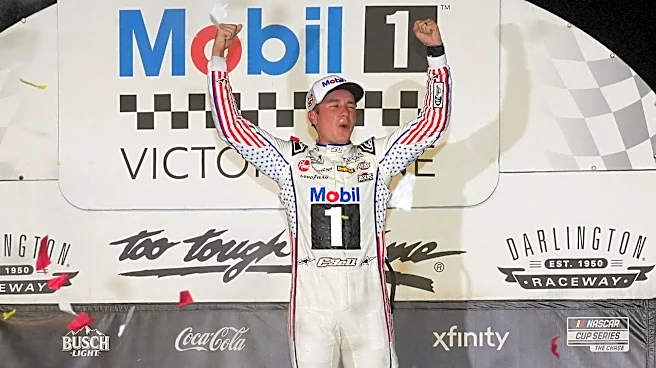


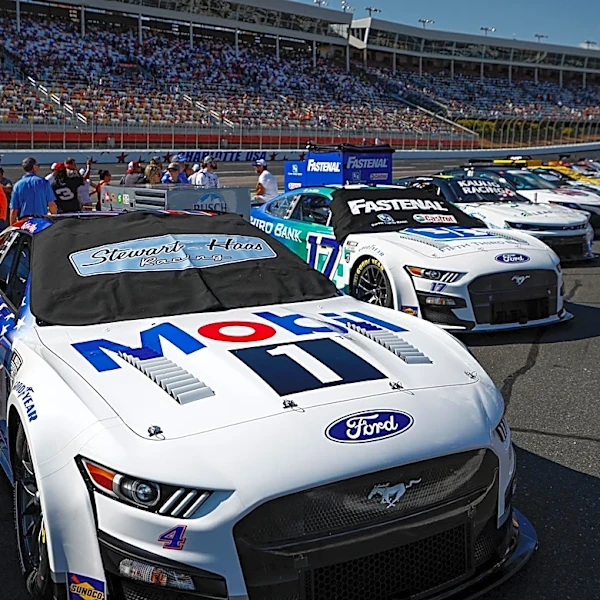
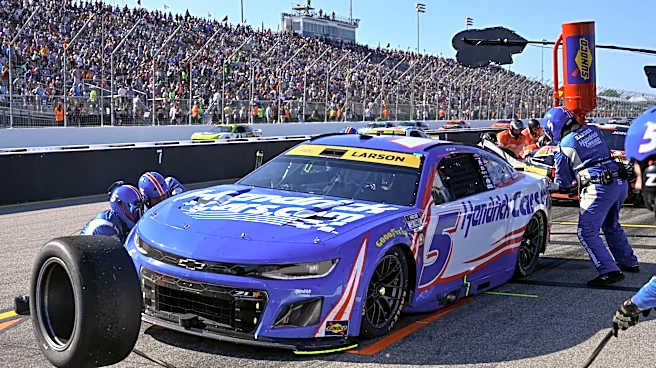

Darlington Raceway, an egg-shaped oval track located in Darlington, South Carolina, has been a cornerstone of NASCAR racing since its inaugural season in 1950. Conceived by Darlington native Harold Brasington, the track was envisioned as a Southern counterpart to the iconic Indianapolis Motor Speedway and its famous Indianapolis 500 race. From its ambitious beginnings to its current status as a NASCAR-owned facility, Darlington has consistently maintained
its reputation as one of the most demanding circuits on the racing schedule, hosting prestigious events like the Southern 500.
The Vision of Harold Brasington and Early Challenges
Harold Brasington's dream of bringing high-speed racing to his hometown led to the creation of Darlington Raceway. He aimed to replicate the success and grandeur of the Indianapolis Motor Speedway, establishing a significant racing venue in the South. However, Brasington's direct involvement with the facility was short-lived, as he quickly severed ties after its opening. Control of the track then passed to Bob Colvin, who assumed the role of president.Colvin embarked on a mission to expand and improve the speedway, recognizing its potential. His efforts, however, were cut short by his death in 1967, leaving much of the planned work unfinished. During this period, the track faced criticism for its lack of amenities, highlighting the need for further development to match its growing stature in the racing world. Despite these early hurdles, Darlington Raceway had already begun to carve out its place in motorsports history.
Evolution and Ownership Changes
Following Colvin's passing, Barney Wallace was elected general manager and later president of the track. Wallace's tenure, however, was characterized by a slow pace of upgrades and maintenance. NASCAR writer Steve Waid described Wallace as a "totally colorless man" who was reluctant to spend money unless absolutely necessary. Despite this, some improvements were made, including the reconfiguration of turns three and four in 1969, increasing their banking from 15 to 25 degrees and widening them to 31 feet. Upgrades were also made to the press box, and a new concrete wall was installed in turns one and two.Further renovations continued in the 1970s, including a significant $100,000 renovation of the garage area in 1973. By 1975, the track was fully enclosed with a concrete wall, enhancing safety and spectator experience. A complete repave of the track was carried out three years later. In 1982, the International Speedway Corporation (ISC) acquired the facility, marking a new era of ownership. ISC continued the expansion efforts into the 1990s, further solidifying Darlington's infrastructure and capacity. The frontstretch grandstand was renamed the Colvin Grandstand in 1982 in honor of Bob Colvin, and an additional 2,157 seats were added the following year, bringing the venue's capacity to 47,000 as of 2021.
The "Too Tough To Tame" Reputation
Darlington Raceway is renowned for its unique and challenging design. It is a 1.366-mile egg-shaped oval with an asymmetrical layout, meaning the first two turns have a wider radius than the last two. The banking varies, with 25 degrees in the first two turns, 23 degrees in the last two, and 6 degrees on the straights. This unusual configuration, combined with an unusually abrasive track surface and a preferred racing line that often runs perilously close to the wall, has earned Darlington the nickname "The Lady in Black" and "Too Tough To Tame."NASCAR drivers consistently regard Darlington as one of the toughest circuits on the schedule. The asymmetrical shape forces teams to make compromises, often sacrificing performance in one set of turns to optimize for the other. This inherent difficulty ensures that victories at Darlington are hard-earned and highly prestigious, contributing to the track's enduring legacy as a true test of skill and engineering in stock car racing. The Southern 500, in particular, remains one of the most esteemed races on the NASCAR Cup Series calendar, a testament to Darlington's unique place in the sport despite its location in a smaller market.