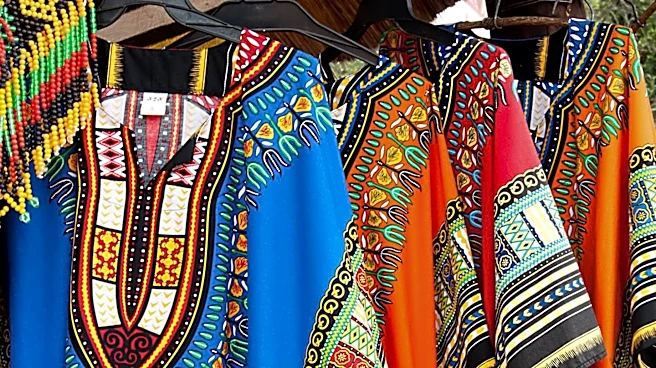








The dashiki is a vibrant garment that covers the upper body, primarily worn in West Africa, but it has also gained significant popularity and cultural resonance among communities in the African diaspora, particularly African Americans. This colorful attire exists in both formal and informal versions, ranging from simple draped clothing to elaborately tailored suits. Its distinctive features often include a loose-fitting pullover design, an ornate
V-shaped collar, and meticulously tailored and embroidered neck and sleeve lines. The journey of the dashiki, from its linguistic roots to its widespread recognition, reflects a rich tapestry of cultural exchange and adaptation.
Origins and Etymology
The term "dashiki" itself has a fascinating linguistic history, stemming from the Yoruba word "dàńṣíkí." This Yoruba term is, in turn, a loanword from the Hausa "dan ciki," which literally translates to 'shirt' or 'inner garment.' This etymology suggests its initial function as a practical, loose-fitting pullover designed for men in West Africa, likely serving as a comfortable work tunic. The garment's design was well-suited to the climate and daily activities of the region, emphasizing comfort and utility.
While the garment's name has deep West African roots, the now widely recognized trademark dashiki design has a more recent origin. It was born from a wax print pattern created by Dutch designer Toon van de Mannaker for the Netherlands-based company Vlisco. Van de Mannaker's inspiration for this particular print pattern came from the silk embroidered tunics worn by Christian Ethiopian noblewomen during the 19th century. This fusion of West African practicality with Ethiopian aesthetic influences, channeled through a Dutch designer, highlights the complex global pathways of textile design.
Popularity and Cultural Significance
Once introduced, this specific wax print pattern quickly gained traction in the West African market. It became widely known as the "Angelina pattern" following the release of the popular Ghanaian highlife hit song "Angelina" by The Sweet Talks. This association with a popular song further cemented its place in the cultural consciousness of the region, giving it a memorable and beloved identity.
Beyond West Africa, the dashiki's influence spread, particularly within the African diaspora. In Congo, for instance, the pattern is also recognized by other names, such as "Miriam Makeba" or "Ya Mado." Miriam Makeba, a renowned South African musician, frequently wore wax prints, contributing to the garment's visibility. "Ya mado!" is a memorable lyric from Fabregas's song "Mascara," whose music video notably features dancers wearing dashikis, further illustrating its integration into contemporary African popular culture. The adoption and popularization of the dashiki by African Americans underscore its role as a symbol of cultural pride and connection to African heritage.