


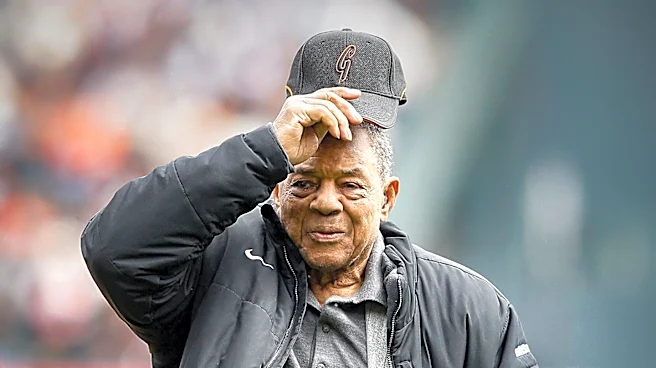
The trade that sent Willie Mays from the San Francisco Giants to the New York Mets in May 1972 was more than just a player transaction; it was a complex interplay of financial realities, personal aspirations, and strategic team building. This move, which brought one of baseball's greatest legends back to New York, sheds light on the business side of professional sports, revealing the intricate negotiations, financial constraints, and human elements
that often underpin such high-profile decisions. The circumstances surrounding Mays' departure from the Giants and his arrival in New York offer a compelling case study in the economics and emotional dynamics of baseball.
Pre-Trade Tensions and Giants' Financial Woes
Before the 1972 season, Willie Mays, a cornerstone of the San Francisco Giants franchise for decades, engaged in significant contract discussions that ultimately foreshadowed his departure. Mays had expressed a desire for a long-term commitment from the Giants, specifically a ten-year contract that would allow him to transition into an off-the-field capacity within the organization once his playing career concluded. This request reflected his deep loyalty to the team and his wish to remain involved with the club that had been his home for so long.
However, the Giants organization was facing considerable financial difficulties at the time, which made it challenging for them to meet Mays' long-term demands. As a result, Mays had to settle for a two-year playing contract worth $330,000, a substantial sum but not the extended commitment he had sought. Compounding these financial and contractual issues were on-field tensions. Mays experienced a "tortuous start" to the 1972 season, batting only .184 with three runs batted in through his first 19 games. Furthermore, he had a public disagreement with manager Charlie Fox, even leaving the stadium before a doubleheader on April 30 without informing him. These factors collectively created an environment ripe for a major change, setting the stage for the trade that would send Mays back to New York.
The Mechanics of the Trade
The trade that brought Willie Mays to the New York Mets was finalized on May 11, 1972. In exchange for the legendary outfielder, the Mets sent pitcher Charlie Williams and an undisclosed amount of money, rumored to be $100,000, to the San Francisco Giants. This transaction was a strategic move for both clubs, addressing their respective needs and circumstances. For the Giants, it provided some financial relief and a younger player, while for the Mets, it was an opportunity to acquire a beloved icon and boost team morale and fan engagement.
Charlie Williams, the player involved in the trade, had begun the 1972 season with the Mets' Triple-A affiliate, the Tidewater Tides. After being traded to the Giants, Williams appeared in only three games for the major league club that season, spending the majority of his time with their Triple-A affiliate, the Phoenix Giants, where he posted a 10-10 record with a 4.60 earned run average. He would split the 1973 season between Phoenix and San Francisco before making the Giants' major league roster for good in 1974. The financial aspect of the trade was also significant for Mays. The Mets agreed to pay him $165,000 per year for both the 1972 and 1973 seasons. Crucially, they also promised Mays an annual payment of $50,000 for ten years after his retirement, providing him with a substantial post-playing income and demonstrating the Mets' commitment to his long-term well-being.
Motivations and Immediate Impact
The motivations behind the Willie Mays trade were multifaceted. For the New York Mets, the acquisition was largely driven by owner Joan Payson's long-held desire to bring Mays back to his baseball roots in New York. Mays had remained incredibly popular in the city, and Payson saw an opportunity to reunite him with the fan base that had first embraced him. This move was not just about on-field performance, but also about rekindling a connection with the team's history and generating excitement among the fans.
The immediate impact of the trade was electrifying. Mays' debut with the Mets on May 14, 1972, against his former team, the San Francisco Giants, was a highly anticipated event. He did not disappoint, hitting a fifth-inning home run that put New York ahead for good. This moment was met with "ecstatic applause" from the fans at Shea Stadium, confirming the wisdom of the Mets' decision and the enduring appeal of Mays. In his first season with the Mets, Mays played in 69 games, batting .267 with eight home runs and 19 runs batted in. While his playing career would conclude after the 1973 season, the trade ensured that one of baseball's greatest legends finished his career in the city where it all began, leaving a lasting legacy with the New York Mets, who later retired his number 24. The trade exemplified how business decisions in baseball can intertwine with sentiment and historical significance.