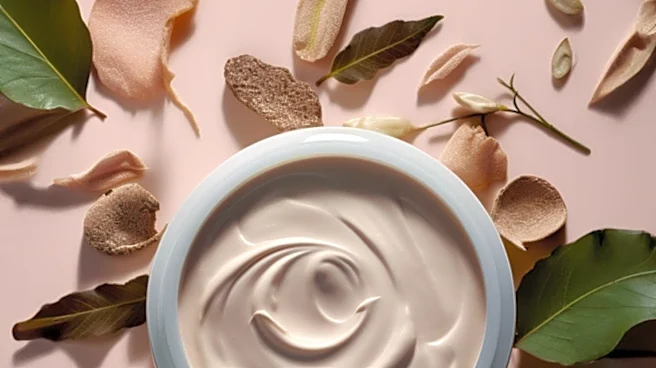






Cold cream, a product recognized for its moisturizing properties and versatility, has a history spanning nearly two millennia. This facial treatment cream, also used as a makeup remover and shaving cream, derives its name from the cooling sensation it imparts upon the skin. Unlike vanishing cream, which is an oil-in-water emulsion designed to disappear when applied, cold cream is a water-in-oil emulsion, meaning small amounts of water are dispersed
within a larger quantity of oil. Its enduring presence in skincare attests to its fundamental effectiveness, with its origins tracing back to ancient Greece and evolving through various formulations over centuries.
The Galenic Origin: A Second-Century Innovation
The invention of cold cream is widely attributed to Galen, a physician practicing in second-century Greece. His original formulation laid the groundwork for what would become a staple in cosmetic and medicinal applications. This early version consisted of rose water, beeswax, and either almond or olive oil. The beeswax played a crucial role as the emulsifying ingredient, binding the water and oil components together. However, this initial method was not without its challenges. Creams made solely with beeswax required extensive mixing to achieve a stable consistency and were prone to separating upon standing, indicating the inefficiency of beeswax as a sole emulsifier compared to modern alternatives.Enhancing Stability: The Introduction of Borax
To overcome the stability issues inherent in the original Galenic formula, later innovators introduced small quantities of borax. This addition marked a significant improvement in the production of cold cream. Borax works by saponifying fatty acids present in the beeswax, a chemical process that creates small amounts of soap. This soap then acts as an emulsifying agent, leading to a much more stable cream that was less likely to separate. This refinement allowed for a more consistent and reliable product, contributing to its widespread adoption and longevity.Evolution of Formulations Through the Centuries
While the core concept of grease and water remained central, the formulation of cold cream continued to evolve beyond Galen's initial recipe. An 1857 account noted that the modern formula, while substantially similar in its basic components, differed significantly in odor and quality. Perfumers began to distinguish cold creams by their scent, offering variations such as camphor, almond, violet, and rose. This diversification reflected a growing interest in cosmetic refinement and personalization.Further historical records illustrate this evolution. A 1650 edition of the London Dispensatory, edited by Nicholas Culpeper, provided a specific formula: four ounces of white wax, a pound of oil of roses omphacine, melted together in a double vessel. This mixture was then gradually combined with cold water, poured repeatedly between vessels, and stirred until it turned white. The final step involved washing it in rose water, with a small addition of rose water and rose vinegar. This detailed recipe highlights the artisanal nature of cold cream production in earlier eras.