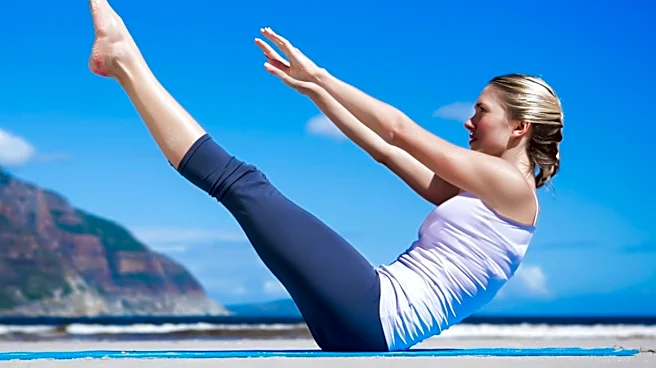





Urdhva Mukha Paschimottanasana is a specific yoga posture that stands out due to its unique balancing requirements. This asana, or yoga pose, is recognized as a balancing form of the broader Paschimottanasana category. Its defining characteristic involves the practitioner's legs and hands pointing upwards, creating a challenging yet rewarding experience for those who attempt it. The name itself, Urdhva Mukha Paschimottanasana, provides a descriptive
insight into its nature, with "Urdhva Mukha" often translating to "upward-facing" and "Paschimottanasana" referring to an intense stretch of the west side of the body, which typically means the back of the body.
This particular pose is not only known by its primary Sanskrit name but also by an alternative designation: Ubhaya Padangusthasana. This additional name further emphasizes certain aspects of the pose, with "Ubhaya" meaning "both" and "Padangusthasana" relating to holding the big toes. This suggests that the pose often involves grasping both big toes while maintaining the upward-facing and balancing position. The existence of multiple names for the same asana is common in yoga, often highlighting different nuances or historical interpretations of the posture.
The Balancing Act of Urdhva Mukha Paschimottanasana
The core essence of Urdhva Mukha Paschimottanasana lies in its demand for balance. Unlike many seated or standing poses that offer a broad base of support, this asana requires the body to find equilibrium while the legs and hands are extended upwards. This balancing act engages various muscle groups, particularly those in the core, to stabilize the torso and maintain the posture. The upward orientation of the limbs adds to the complexity, as it shifts the body's center of gravity and necessitates precise control.Achieving this balance is a gradual process that typically involves developing strength, flexibility, and proprioception—the body's awareness of its position in space. The pose challenges practitioners to focus their attention and breath, which are crucial elements in maintaining stability in any balancing asana. The act of balancing itself can be a meditative experience, drawing the mind inward and fostering a sense of calm amidst physical exertion. The upward extension of the limbs, while contributing to the balance challenge, also serves to lengthen the spine and stretch the hamstrings and calves.
Alternative Names and Interpretations
As mentioned, Urdhva Mukha Paschimottanasana is also known as Ubhaya Padangusthasana. This alternative name is significant because it often points to a key action within the pose: the grasping of the big toes. In many yoga traditions, holding the toes is a common way to deepen a stretch and engage specific energetic lines within the body. The term "Ubhaya" specifically indicates that both big toes are involved, distinguishing it from poses where only one toe might be held.Beyond these Sanskrit names, the pose also has English translations that help to convey its visual and physical characteristics. It is sometimes referred to as "Facing Wide-Angle Seated Pose" or "Urdhva Upavistha Konasana." These English names offer a more direct description for those unfamiliar with Sanskrit terminology. "Facing Wide-Angle Seated Pose" suggests a seated position with legs spread, while "Urdhva Upavistha Konasana" combines "Urdhva" (upward), "Upavistha" (seated), and "Konasana" (angle pose), further illustrating the upward and angled nature of the limbs in this balancing posture. These various names, both Sanskrit and English, collectively paint a comprehensive picture of Urdhva Mukha Paschimottanasana as a complex and multifaceted yoga asana.