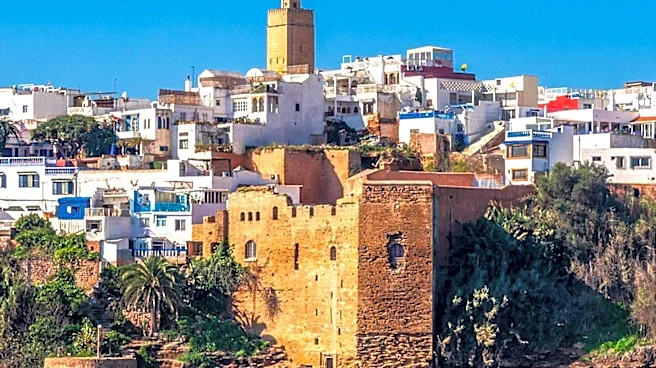







Rabat, the capital city of Morocco, has a rich history that spans several centuries. From its founding in the 12th century to its current status as a bustling metropolis, Rabat's evolution is marked by periods of growth, decline, and resurgence. This article delves into the historical journey of Rabat, highlighting key milestones that have shaped its development.
Founding and Early Growth
Rabat was founded in the 12th century by the Almohads, a Berber Muslim dynasty that played
a significant role in the history of North Africa. The city was established as a naval base, reflecting its strategic importance on the Atlantic coast. The Almohads named the city "Ribat al-Fath," meaning "stronghold of victory," underscoring its military significance.
During its early years, Rabat experienced a period of growth, becoming an important center for trade and military operations. The city's location at the mouth of the Bou Regreg River made it a vital point for controlling maritime activities along the coast. However, this initial prosperity was not to last, as Rabat soon entered a period of decline.
Decline and Corsair Haven
In the 17th century, Rabat's fortunes changed dramatically. The city became a haven for Barbary corsairs, pirates who operated along the North African coast. This period saw Rabat transform into a base for piracy, with corsairs using the city as a launching point for raids on European ships.
The presence of the corsairs brought a degree of notoriety to Rabat, but it also contributed to the city's decline. The focus on piracy led to neglect in other areas, and Rabat's infrastructure and economy suffered as a result. Despite this, the city's strategic location continued to make it a point of interest for various powers.
Modern Era and Capital Status
The turning point for Rabat came in the early 20th century when the French established a protectorate over Morocco in 1912. Recognizing Rabat's strategic importance, the French made it the administrative center of their protectorate. This decision marked the beginning of a new era of development for the city.
When Morocco gained independence in 1956, Rabat was chosen as the capital of the newly independent nation. This decision solidified Rabat's status as a central hub of political and administrative activity in Morocco. Today, Rabat is not only the political capital but also a cultural and historical center, with its medina recognized as a UNESCO World Heritage Site.
Rabat's journey from a 12th-century naval base to the capital of Morocco is a testament to its resilience and strategic importance. The city's history is a tapestry of growth, decline, and resurgence, reflecting the broader historical currents that have shaped Morocco as a whole.