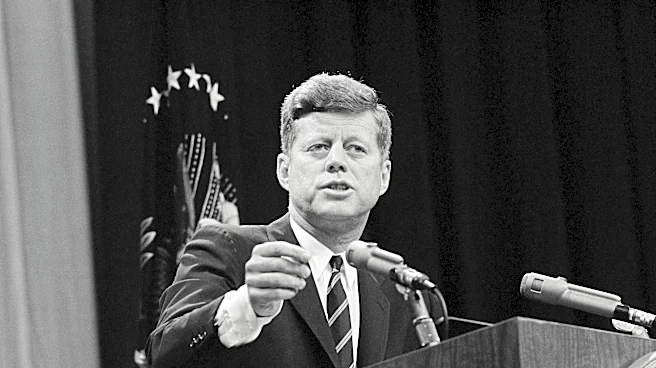






On November 22, 1963, the United States was plunged into shock and sorrow by the assassination of its 35th president, John F. Kennedy. The tragic event unfolded as Kennedy rode in a motorcade through Dealey Plaza in Dallas, Texas. This day would forever be etched into the nation's memory, not only for the loss of a leader but also for the profound and immediate impact it had on the American public, transforming a routine presidential visit into a moment
of national tragedy.
The Fateful Motorcade and the Assassin's Act
The motorcade carrying President Kennedy was making its way through Dealey Plaza when shots rang out. Lee Harvey Oswald, a U.S. Marine veteran, was quickly identified as the perpetrator. Oswald used a 6.5x52mm Carcano Model 38 rifle to carry out the assassination. The precision and swiftness of the act left the nation reeling, as news began to spread about the unthinkable event that had just occurred in Dallas.
The immediate aftermath of the shooting was chaotic, with Secret Service agents and local law enforcement scrambling to secure the scene and identify the shooter. The focus quickly turned to the wounded president, who was rushed to Parkland Memorial Hospital. Despite the best efforts of medical personnel, President Kennedy's injuries proved fatal, and he was pronounced dead shortly after the shooting. The news of his death would soon be broadcast across the nation, initiating a period of intense mourning.
A Nation Gripped by Grief and Disbelief
The assassination triggered an unprecedented wave of shock and sorrow across the United States. The public's reaction was immediate and profound, with television audiences doubling within 40 minutes of the first reports of the shooting. Millions of Americans tuned in to their televisions and radios, desperate for information and struggling to comprehend the magnitude of what had happened. The collective grief was palpable, as ordinary citizens grappled with the sudden and violent loss of their young president.
While the overwhelming sentiment was one of sorrow, there were isolated incidents of a different nature. In some parts of the South, a few individuals expressed joy in response to Kennedy's death. These reactions, though rare, highlighted the deep political and social divisions that existed within the country at the time. However, these isolated instances were largely overshadowed by the widespread national mourning that enveloped the vast majority of the population, uniting them in a shared experience of loss and disbelief.