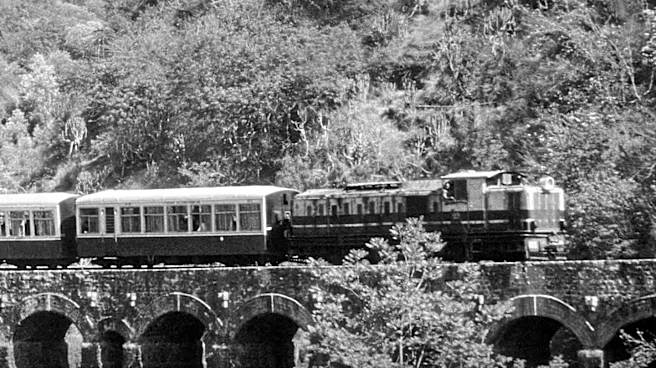







The Grand Trunk Railway, established in 1852, was not only a significant player in the economic and political development of Canada but also a showcase of engineering prowess. As the railway expanded, it undertook several impressive construction projects that demonstrated the capabilities of 19th-century engineering. These feats were crucial in establishing the railway as a major transportation network across Canada and the United States.
Bridging the St. Lawrence River
One of the
most notable engineering achievements of the Grand Trunk Railway was the successful bridging of the St. Lawrence River. On August 25, 1860, the first Victoria Bridge was opened in Montreal, marking a significant milestone in railway construction. This bridge was the first to span the St. Lawrence River, providing a vital link for the railway and facilitating the movement of goods and passengers.
The construction of the Victoria Bridge was a testament to the engineering skills of the time. It required innovative techniques to overcome the challenges posed by the river's width and depth. The bridge's completion not only enhanced the railway's connectivity but also symbolized the technological advancements of the era.
The Niagara River and St. Clair River Projects
In addition to the Victoria Bridge, the Grand Trunk Railway undertook other significant projects, including the bridging of the Niagara River between Fort Erie, Ontario, and Buffalo, New York. This project further extended the railway's reach into the United States, enhancing trade and transportation between the two countries.
Another remarkable engineering feat was the construction of a tunnel beneath the St. Clair River, connecting Sarnia, Ontario, and Port Huron, Michigan. This tunnel, opened in August 1890, replaced the railcar ferry service at the same location. The tunnel's construction involved overcoming numerous technical challenges, including the river's strong currents and the need for a stable structure beneath the water.
The Impact of Engineering on the Railway's Success
The engineering achievements of the Grand Trunk Railway were instrumental in its success as a transportation network. These projects not only expanded the railway's reach but also demonstrated the potential of engineering to overcome natural obstacles and connect distant regions.
The railway's ability to bridge rivers and construct tunnels was a key factor in its growth and influence. These engineering marvels facilitated trade and movement, contributing to the economic development of Canada and the United States. The Grand Trunk Railway's legacy as an engineering pioneer continues to be recognized today, highlighting the importance of innovation in the transportation industry.