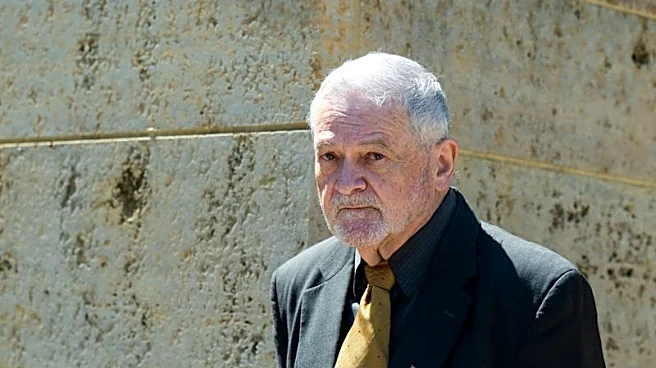







Anthony Stephen Fauci, born on December 24, 1940, in Brooklyn, New York, has dedicated over five decades to American public health. As a physician and immunologist, he has served in various capacities within the U.S. health sector, notably as the director of the National Institute of Allergy and Infectious Diseases (NIAID) since 1984. His career spans multiple presidential administrations, from Ronald Reagan to Joe Biden, where he has consistently
acted as a health advisor, making him a prominent and long-standing figure in the nation's medical landscape.
Early Career and Leadership at NIAID
Fauci's journey in public health began after completing his medical residency in 1968 when he joined the National Institutes of Health (NIH). He started as a clinical associate in NIAID's Laboratory of Clinical Investigation (LCI). His leadership roles quickly expanded; by 1974, he became the head of the LCI's Clinical Physiology Section, and in 1980, he was appointed chief of NIAID's Laboratory of Immunoregulation. His ascent culminated in 1984 with his appointment as the director of NIAID, a position he held until 2022. Throughout his tenure, Fauci was offered the directorship of the NIH multiple times but consistently declined, choosing instead to remain at the helm of NIAID.
His work at NIAID placed him at the forefront of U.S. efforts to combat various viral diseases, including HIV/AIDS, SARS, the Swine flu, MERS, Ebola, and COVID-19. Beyond his direct research and leadership, Fauci played a crucial role in the early 2000s in establishing the President's Emergency Plan for AIDS Relief (PEPFAR). He also significantly contributed to the development of biodefense drugs and vaccines following the September 11 terrorist attacks, demonstrating his commitment to national health security.
Contributions to HIV/AIDS Research and Public Engagement
Fauci's impact on understanding and combating HIV/AIDS is particularly notable. He made significant contributions to understanding how HIV compromises the body's natural defense system, leading to AIDS. His research elucidated the mechanisms by which endogenous cytokines induce HIV expression. He also dedicated efforts to developing therapeutic strategies and immune reconstitution for patients with the disease, alongside working towards a vaccine to prevent HIV infection. His ongoing research has focused on identifying the immunopathogenic mechanisms of HIV infection and the scope of the body's immune responses to the virus.
During the AIDS epidemic in the early 1980s, Fauci was one of the leading researchers. In 1981, he and his team began searching for a vaccine or treatment for the novel virus, facing numerous obstacles. By October 1988, as NIAID director, he encountered significant anger from the LGBTQ+ community, who felt largely ignored by the government. Despite initial criticism regarding the U.S. government's response and perceived delays in promoting experimental HIV/AIDS drugs, Fauci actively engaged with AIDS advocates. He worked to make experimental AIDS treatments more accessible and was eventually praised for his efforts. Even a fierce critic, Larry Kramer, who had initially called Fauci an