







Satin is a distinctive type of woven material recognized by its glossy surface and smooth feel. It is one of the three fundamental types of textile weaves, alongside plain weave and twill weave. The unique characteristics of satin, including its lustrous appearance and flowing drape, stem directly from its specific weaving technique. While often associated with luxurious garments, the satin weave is also employed in various other applications, from home
furnishings to specialized footwear.
The Fundamental Satin Weave Structure
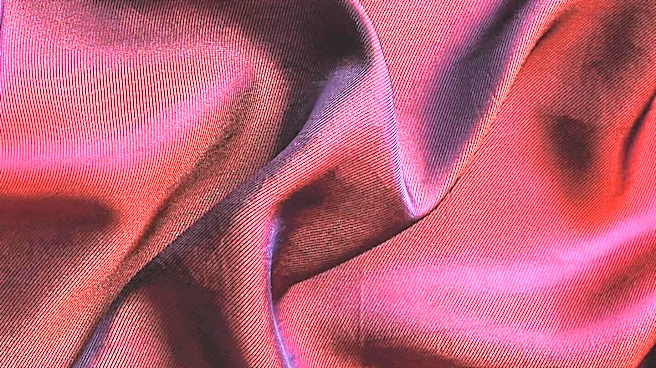
At its core, the satin weave is characterized by a pattern where four or more fill or weft yarns float over a warp yarn, and similarly, four warp yarns float over a single weft yarn. These "floats" are essentially missed interfacings, meaning the yarn lies on top of the opposing yarn for a longer stretch than in other weaves. In a warp-faced satin, the warp yarn floats over the weft. This extended floating of threads is crucial to the fabric's appearance, as it minimizes the scattering of light, leading to a stronger reflection and the characteristic high luster and even sheen.
While the basic satin weave is typically warp-faced, where warp yarns are floated over weft yarns, there are also instances of weft-faced satins. The choice of fiber is also key in defining the resulting fabric. If filament fibers such as silk, polyester, or nylon are used in a satin weave, the fabric is termed a "satin." However, some definitions are more restrictive, insisting that a satin fabric must only be made from silk. This distinction highlights the importance of both the weave structure and the material composition in textile classification.
Differentiating Satin and Sateen
The primary distinction between satin and sateen lies in the type of yarn used in the satin weave structure. As mentioned, "satin" refers to fabrics made with filament fibers like silk, polyester, or nylon. In contrast, if the satin weave is created using short-staple yarns, such as cotton, the resulting fabric is known as "sateen." This difference in fiber type leads to variations in feel, appearance, and care requirements.
Sateen, like satin, exhibits a dense weave, a sheen, and a softer feel due to the satin weave structure. However, because it is made from cotton, sateen offers different practical advantages. Unlike its silk counterpart, cotton sateen is generally easier to maintain, being machine washable. It can also be air-dried or tumble-dried, typically experiencing only minimal to moderate shrinkage. While sateen can wrinkle, these can usually be smoothed out easily with an iron set to the cotton setting. Some sateen fabrics are also mercerized, a chemical process that enhances the fibers' softness, smoothness, water resistance, and resilience.
Diverse Applications and Specialized Satin Types
The versatility of the satin weave allows for its use in a wide array of products. In clothing, satin is a popular choice for items such as lingerie, nightgowns, blouses, and evening gowns, as well as boxer shorts, shirts, and neckties. It is also specifically used in the production of pointe shoes for ballet. Beyond apparel, satin finds extensive use in interior furnishings, upholstery, and bedding, contributing a touch of elegance and smoothness to home environments.
Numerous variations of the basic satin weave exist, each with its own unique characteristics. For example, "antique satin" is a type of satin-back shantung woven with slubbed or unevenly spun weft yarns, giving it a textured appearance. "Duchesse satin" is a particularly luxurious, heavy, and stiff satin, often chosen for bridal wear and accessories due to its pearly sheen and structural stability. Other specialized types include "charmeuse," a lightweight, draping satin-weave fabric with a dull reverse, and "double-faced satin," which features a glossy surface on both sides, sometimes with different patterns. These variations demonstrate the adaptability of the satin weave to achieve diverse aesthetic and functional outcomes.