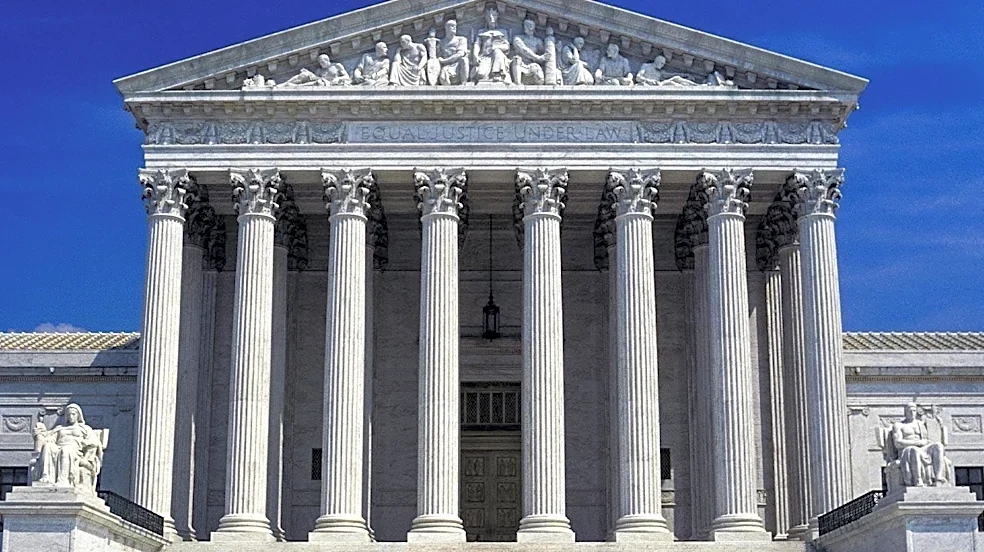








Clarence Thomas's nomination to the Supreme Court of the United States in 1991 was a pivotal and highly contentious event in American political history. President George H. W. Bush nominated Thomas on July 1, 1991, to fill the seat vacated by the retiring Justice Thurgood Marshall, a civil rights icon and the first African American justice on the Supreme Court. The process, which culminated in a narrow 52-48 Senate confirmation vote on October 15,
1991, was marked by intense ideological battles and, most notably, by explosive allegations of sexual harassment that captivated the nation.
Initial Nomination and Early Opposition
President Bush's decision to nominate Clarence Thomas, then a judge on the United States Court of Appeals for the District of Columbia Circuit, was met with immediate opposition from various groups. Many women's organizations and civil rights groups expressed concerns over Thomas's conservative political views, particularly his stance on abortion and his criticism of affirmative action. These groups had previously opposed Bush's Supreme Court nominee from the prior year, David Souter, indicating a broader ideological struggle over the direction of the Court. Attorney General Richard Thornburgh had even warned President Bush that replacing Thurgood Marshall with a candidate not perceived to share Marshall's views would likely lead to a difficult confirmation process.
Constitutional law expert Michael Gerhardt characterized the Thomas nomination as a "bold political move" designed to make it challenging for civil rights organizations and southern Black individuals, who had opposed Judge Robert Bork's Supreme Court nomination, to oppose Thomas. Gerhardt also suggested that Bush was returning to a practice of nominating "extreme ideologues" for the Supreme Court, a practice many hoped had ended with Bork's rejection. The White House and Senate Republicans approached the confirmation hearings as a political campaign, learning from the liberal campaign that had successfully defeated Bork's nomination.
Judiciary Committee Review and the ABA Rating
The Senate Judiciary Committee began its public confirmation hearings on September 10, 1991, lasting for ten days. Senators focused on Thomas's legal views, examining his speeches, writings, and judicial decisions. During these proceedings, Senate Judiciary Committee chairman Joe Biden questioned Thomas about his views on property rights, specifically referencing Richard Epstein's book *Takings: Private Property and the Power of Eminent Domain*. Biden held up the book and denounced its contents, with the Cato Institute later paraphrasing Biden's line of questioning as, "Are you now or have you ever been a libertarian?"
Customarily, Supreme Court nominees were evaluated by a committee of the American Bar Association (ABA) before Senate Judiciary Committee consideration. Anticipating a poor rating for Thomas, the White House and Republican Senators pressured the ABA for at least a "qualified" rating and simultaneously attempted to discredit the ABA as partisan. Ultimately, the ABA's Standing Committee on the Federal Judiciary voted 12 "qualified," one abstention, and two "not qualified," resulting in an overall "qualified" rating. This represented one of the lowest levels of support for a Supreme Court nominee from the ABA, though it ultimately had little impact on Thomas's nomination.
Sexual Harassment Allegations and Reopened Hearings
The confirmation process took a dramatic turn on October 6, 1991, after the initial hearings had concluded and while the full Senate was debating Thomas's nomination. NPR Supreme Court correspondent Nina Totenberg aired information from a leaked Judiciary Committee/FBI report detailing sexual harassment allegations against Thomas by Anita Hill, a law professor who had previously worked for Thomas at the Department of Education and the Equal Employment Opportunity Commission. Hill alleged that Thomas made unwelcome sexual comments to her during their time working together.
These allegations, which had been investigated by the FBI in late September at the request of Chairman Biden, were initially not seen by Biden as a reason to postpone the committee's scheduled vote. However, after Totenberg's story aired, intense pressure from House Democratic women and various opposing groups forced Biden to reopen the hearings. This was only the third time in Senate history such an action had been taken, and the first since 1925. The final Senate vote was postponed, and the nation watched as televised hearings resumed, plunging the confirmation into a media frenzy. President Bush publicly declared his "total confidence" in Thomas amidst the uproar.
Testimonies and the Final Vote
Anita Hill testified on October 11, 1991, detailing sexually provocative statements she alleged Thomas made, including references to pornographic films, his "sexual prowess," and a porn star named "Long Dong Silver." She also recounted an incident where Thomas allegedly asked, "Who has put pubic hair on my Coke?" Hill stated she followed Thomas to the EEOC because the work was interesting and the "sexual overtures... had ended." Two other women, Angela Wright and Rose Jourdain, made statements to Senate staffers supporting Hill's claims, but neither testified publicly. Wright alleged similar comments and pressure for dates, while Jourdain corroborated Wright's accounts.
Clarence Thomas testified on the afternoon of October 11, 1991, vehemently denying all allegations. He stated, "I deny each and every single allegation against me today that suggested in any way that I had conversations of a sexual nature or about pornographic material with Anita Hill, that I ever attempted to date her, that I ever had any personal sexual interest in her, or that I in any way ever harassed her." Thomas famously characterized the hearing as a "high tech lynching" for "uppity blacks who in any way deign to think for themselves." He asserted that the "sleaze" was "searched for by staffers," "leaked to the media," and then "validated" and "displayed... over our entire nation." Despite the intense controversy, the Senate ultimately confirmed Thomas by a narrow 52-48 vote on October 15, 1991. He took the oath of office on October 23, 1991.