









Macaroni and cheese, a dish now widely recognized as a staple comfort food, boasts a rich and lengthy history that stretches back centuries. While often associated with American cuisine, its origins are deeply rooted in European culinary traditions, particularly in medieval England and Italy. This simple yet satisfying combination of pasta and cheese has evolved significantly over time, adapting to different cultures and culinary practices to become
the beloved dish it is today.
Early European Roots of Pasta and Cheese
The concept of combining pasta with cheese can be traced back to the 14th century. One of the earliest mentions appears in the Italian recipe book *Liber de coquina*, which is considered one of the oldest medieval recipe collections. This book featured various dishes made with pasta and Parmesan cheese, indicating that such combinations were already part of the culinary landscape in Italy during that period. This early form of pasta and cheese casserole laid the groundwork for future variations.
Around the same time, in 14th-century England, a dish called "makerouns" was documented in *The Forme of Cury*, an English cookbook. This recipe described a dish made with fresh pasta coated in a mixture of butter and cheese. This English precursor to modern macaroni and cheese highlights the parallel development of similar pasta and cheese dishes across different European regions, suggesting a widespread appreciation for this food pairing.
Evolution Through the Centuries
The recipe for pasta and cheese continued to evolve, with notable appearances in later cookbooks. Elizabeth Raffald's *The Experienced English Housekeeper* included a recipe that featured a béchamel sauce with cheddar cheese, accompanying macaroni sprinkled with Parmesan, and baked until golden. This recipe introduced a more refined sauce base and specific cheese types, moving closer to the macaroni and cheese we recognize today.
Another significant recipe from 1784 detailed a process where macaroni was boiled, breaded, and then fried. Thick cream was then added along with a knob of butter rolled in flour. After five minutes of cooking, the mixture was poured into a dish and topped with Parmesan and pepper. This method showcases a different approach to preparation, incorporating frying and a rich cream sauce, further illustrating the diverse ways in which pasta and cheese were combined.
The American Chapter and Modern Interpretations
The dish made its way to the United States, with a recipe specifically titled "macaroni and cheese" appearing in Mary Randolph's 1824 cookbook, *The Virginia House-Wife*. This publication marked a significant moment in the dish's journey, solidifying its presence in American culinary literature. Over time, macaroni and cheese became a common food for children in the United States and earned its reputation as a quintessential comfort food.
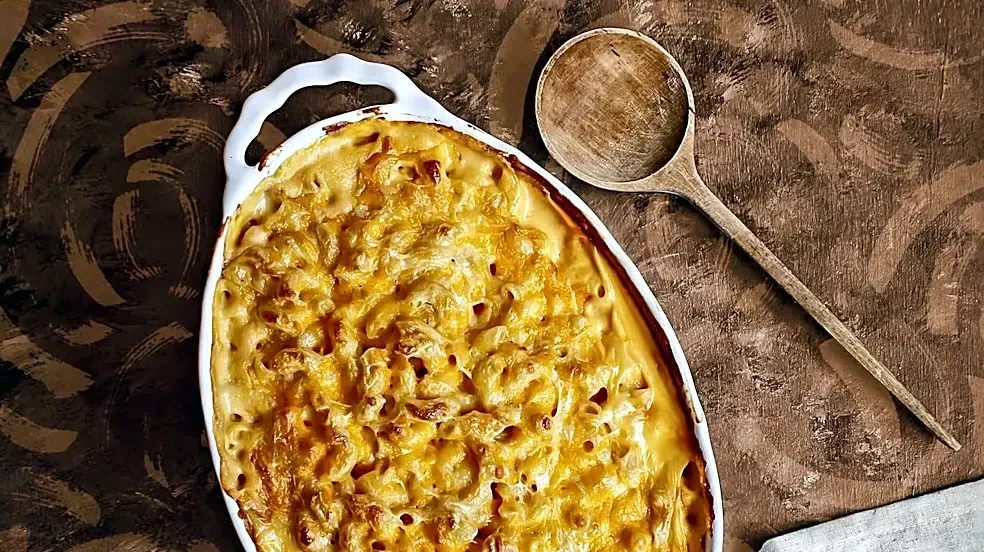
Today, macaroni and cheese is prepared in various ways. The traditional method involves baking it in a casserole dish in the oven, which often results in a golden, crispy topping. However, it can also be prepared more simply in a saucepan on top of the stove, offering a quicker and often creamier version. The most common cheese used is cheddar, contributing to its distinctive flavor. Some variations even include a béchamel sauce, and toppings like breadcrumbs can be added to create a golden crust after baking. The enduring appeal of macaroni and cheese, from its medieval origins to its modern status, underscores its timeless quality as a beloved dish.