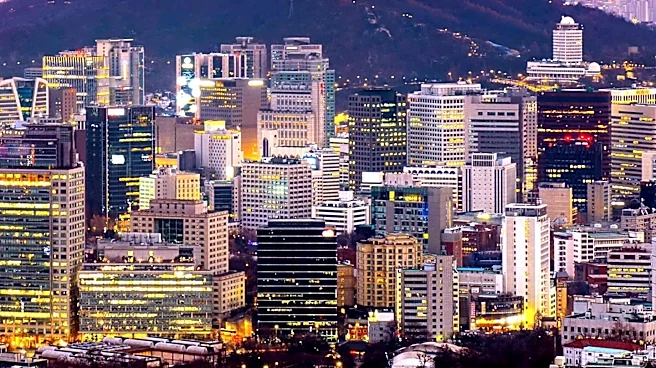








Seoul, the bustling capital of South Korea, is divided into 25 districts, each with its own unique character and history. The city's administrative landscape has undergone significant changes over the years, reflecting its rapid growth and development. This article explores the historical evolution of Seoul's districts, highlighting key milestones in their formation and expansion.
Early Administrative Changes
Seoul's journey as a city of districts began in 1945, when it was divided
into eight districts and 268 neighborhoods. This initial division was a response to the city's rapid growth following national independence. By 1949, Seoul's administrative limits expanded significantly, doubling its size to accommodate the increasing population and urbanization.
The 1960s marked a period of further expansion, with Seoul annexing five counties and 84 districts, increasing its total area to 595.50 square kilometers. This expansion was driven by the need to manage the city's growing population, which had reached 2.59 million by that time. The establishment of new districts like Gwanak-gu and Dobong-gu reflected the city's ongoing efforts to adapt to its changing demographics.
The Impact of the 1980s and 1990s
The 1980s and 1990s were transformative decades for Seoul's administrative landscape. In 1988, extensive restructuring led to the creation of several new districts, including Songpa-gu, Jungnang-gu, and Seocho-gu, increasing the total number of districts to 22. This period also saw Seoul preparing to host the 1988 Summer Olympics, which spurred further urban development and modernization.
The most recent major reorganization occurred in 1995, with the addition of Gangbuk-gu, Geumcheon-gu, and Gwangjin-gu, bringing the total to 25 districts. This expansion was part of a broader effort to manage the city's continued growth and enhance its international stature. By this time, Seoul had firmly established itself as a global metropolis, with a population of over 9.2 million.
The Role of the Seoul Metropolitan Council
The Seoul Metropolitan Council plays a crucial role in overseeing the city's 25 districts. As the legislative body of Seoul, the council is responsible for making decisions on policies, budgets, and legislation that impact the city's administration and development. Council members are elected every four years, with most representing specific districts.
The council's responsibilities include passing ordinances, approving budgets, and reviewing city policies. It also ensures transparency and citizen participation by organizing public hearings and collecting public opinions on city issues. Through its work, the Seoul Metropolitan Council helps shape the future of the city's districts, ensuring they continue to thrive and meet the needs of their residents.