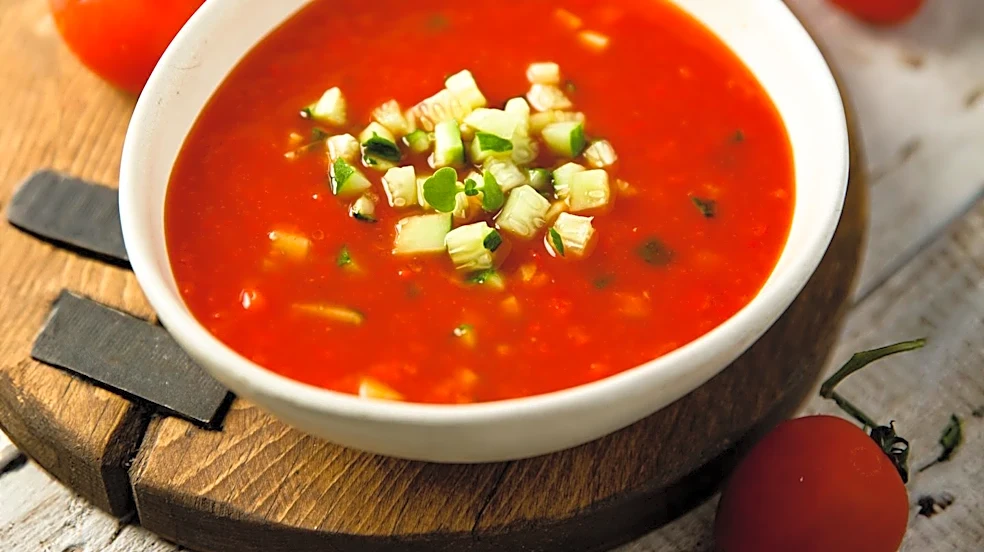









Gazpacho, a cold soup and drink crafted from raw, blended vegetables, holds a special place in the culinary traditions of Spain and Portugal. Its widespread consumption, particularly during the warm summer months, is largely attributed to its inherently refreshing and cooling properties. This makes it an ideal dish for combating the heat, offering a light yet flavorful meal or beverage. The standard gazpacho, often referred to as Andalusian gazpacho, is a testament
to the ingenuity of regional cuisine in adapting to climate and local produce.
Typically served cold, gazpacho's core ingredients include water, olive oil, vinegar, garlic, tomato, cucumber, and other fresh vegetables. The preparation involves blending these raw components, resulting in a smooth, vibrant, and invigorating liquid. This method of preparation is key to its refreshing character, as it preserves the fresh flavors and nutrients of the vegetables without the need for cooking. The simplicity of its ingredients, combined with its cooling temperature, has cemented its status as a beloved summer staple across the Iberian Peninsula.
Gazpacho's Distinct Identity: Beyond Tomato Soup
While gazpacho is often described as a "tomato soup of Spanish origin," it possesses distinct characteristics that set it apart from traditional tomato soups. The most significant difference lies in its preparation: gazpacho is never heated. It is a puree of raw vegetables, ensuring that its flavors remain bright and uncooked. This contrasts sharply with conventional tomato soups, which are typically cooked and served hot, often relying on a different flavor profile developed through heating.
Furthermore, gazpacho is not solely a tomato-rich soup. While tomatoes are a prominent ingredient in the most common red gazpacho, the dish incorporates numerous other vegetables in substantial quantities, such as cucumber and bell peppers. This blend of diverse raw vegetables contributes to its complex flavor and nutritional value, making it more than just a simple tomato preparation. The emphasis on a variety of fresh, uncooked produce is a hallmark of authentic gazpacho.
Regional Culinary Context: Gazpacho vs. Sopa de Tomate
In regions like Andalusia and Extremadura, where gazpacho is deeply traditional, the distinction between gazpacho and *sopa de tomate* (literally "tomato soup") is quite clear. *Sopa de tomate*, when referring to local traditional versions rather than modern industrial or foreign interpretations, describes a particular hot soup. This hot soup features stale bread as a main ingredient, alongside tomatoes, bell peppers, onion, garlic, and often poached eggs. It is cooked and eaten hot, with more bread used than in gazpacho, allowing it to absorb much of the water and tomato juices.
This traditional *sopa de tomate* is essentially a hot bread soup with tomato, related to other bread-based Spanish hot soups like *sopa de ajo*, or certain versions of Southern Portuguese *açorda*, and somewhat similar to Italian *pappa al pomodoro*. Therefore, in Spain, especially in Andalusia where gazpacho is most traditional, gazpacho is considered a fundamentally different dish from *sopa de tomate*. This highlights gazpacho's unique position as a cold, raw vegetable blend, celebrated for its refreshing qualities and distinct culinary identity.