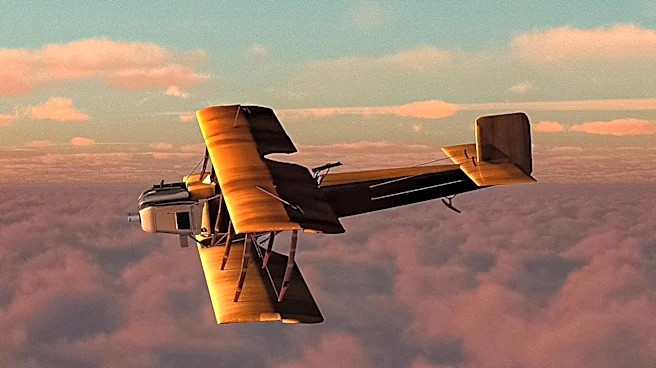







The first aerial circumnavigation of the world in 1924 was an epic undertaking fraught with danger and demanding immense resilience from its aviators. Four Douglas World Cruiser aircraft, piloted by an eight-man team from the United States Army Air Service, embarked on a journey that tested the limits of early aviation technology and human endurance. This article delves into the numerous challenges, mechanical failures, and harrowing incidents that marked
this historic flight, showcasing the determination required to achieve such a pioneering feat.
Early Setbacks and the Loss of the 'Seattle'
The expedition officially began on April 6, 1924, from Seattle, Washington, after the aircraft had flown from Santa Monica, California. However, the perils of the journey became apparent almost immediately. Just nine days after departing Prince Rupert Island, on April 15, the lead aircraft, *Seattle*, experienced a catastrophic engine failure. Flown by Major Martin, with Harvey as the mechanic, the plane blew a three-inch hole in its crankcase, forcing an emergency landing on Portage Bay.
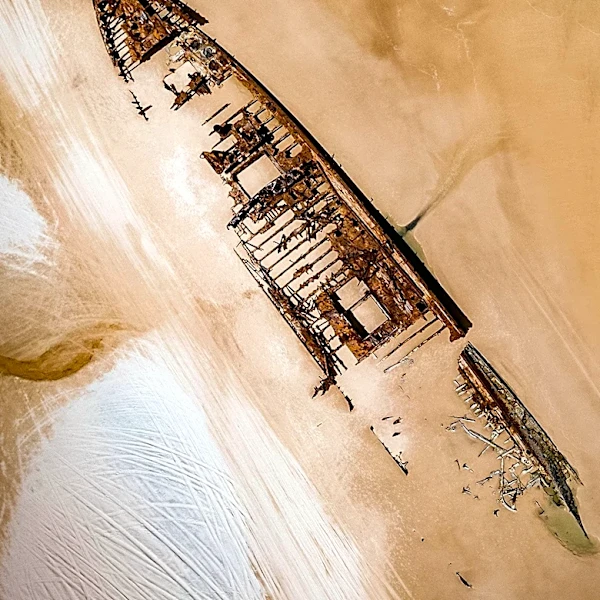
Despite receiving a replacement engine, the *Seattle*'s crew faced further misfortune. On April 30, while attempting to catch up with the other three aircraft waiting in Dutch Harbor, the *Seattle* crashed in dense fog into a mountainside near Port Moller on the Alaska Peninsula. The aircraft was completely destroyed, though the crew miraculously survived. They endured six days in the wilderness before finding shelter and eventually reaching a cannery, marking the first major setback and the loss of one of the original four planes.
Mechanical Woes Across Continents
Even with the loss of the *Seattle*, the three remaining aircraft – *Chicago*, *Boston*, and *New Orleans* – pressed on, with *Chicago* assuming the lead. The journey continued to be plagued by mechanical issues. While flying through French Indochina (modern-day Vietnam), the *Chicago*'s engine broke a connecting rod, forcing a landing in a lagoon near Huế. The aircraft became a local curiosity, with missionaries providing aid and locals climbing onto its pontoons. The other flyers, who had continued to Tourane (Da Nang), eventually found the crew. With the help of local sampans, the aircraft was towed 25 miles to Huế, where an engine, shipped from Saigon, was replaced in what was described as "the fastest – and undoubtedly the first – engine change that had ever been made in Indochina."
Further mechanical challenges arose in India. After converting from floats to wheels in Calcutta, all three aircraft required new engines in Karachi. The *New Orleans* had suffered a catastrophic engine failure just before reaching the city, limping in on intermittent power. Even the pilots faced physical challenges; Smith, one of the pilots, slipped and broke a rib in Calcutta but insisted on continuing without delaying the mission.
The Atlantic Crossing and the Loss of the 'Boston'
The most treacherous leg of the journey involved crossing the Atlantic Ocean. On August 3, 1924, en route from Orkney to Iceland, an oil pump failure forced the *Boston* down onto the sea. The accompanying *Chicago* flew ahead to the Faroes to alert the supporting U.S. Navy light cruiser USS Richmond. Although the crew of the *Boston* was rescued unharmed, the aircraft, while being towed, capsized and sank shortly before reaching the Faroes. This marked the loss of the second aircraft, leaving only *Chicago* and *New Orleans* to complete the circumnavigation.
Even the remaining aircraft faced close calls. In Labrador, Canada, the *Chicago* experienced a fuel-pump failure, which was overcome by four hours of hand pumping by Arnold. Despite these immense difficulties and the loss of two aircraft, the determination of the aviators and the extensive logistical support allowed the remaining two Douglas World Cruisers to complete the journey, landing back in Seattle on September 28, 1924, after 175 calendar days and 363 flying hours.