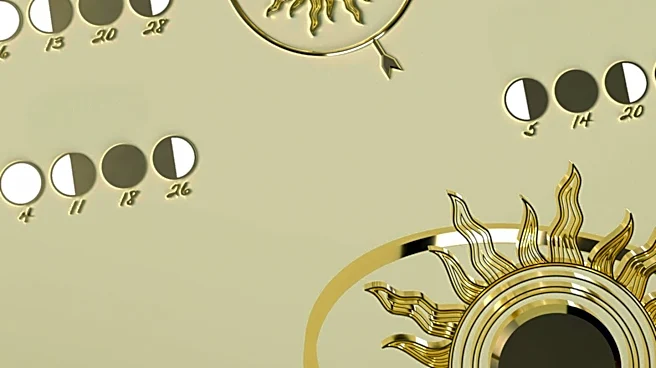





The Saros cycle has been a cornerstone of astronomical knowledge for centuries, providing a reliable method for predicting eclipses. This cycle, which spans 18 years, 11 days, and 8 hours, has been recognized and utilized by various cultures throughout history. Understanding the historical context of the Saros cycle offers insight into how ancient civilizations perceived and interpreted celestial events.
Ancient Knowledge of the Saros Cycle
The Saros cycle's origins can be traced back
to ancient Babylonian astronomers, who were among the first to recognize its significance. They observed that eclipses occurred in a repeating pattern and used this knowledge to predict future eclipses. The Babylonians' understanding of the Saros cycle was so advanced that they could forecast eclipses with remarkable accuracy, a feat that was crucial for their calendar and religious practices.
The term "Saros" itself is believed to have originated from the Greek word "saro," meaning to sweep, which reflects the cycle's ability to predict the sweeping path of eclipses across the sky. This knowledge was passed down through generations and eventually reached the Greeks, who further refined the understanding of the cycle.
The Saros Cycle in Different Cultures
The Saros cycle was not only significant in Babylonian and Greek cultures but also played a role in other ancient civilizations. For instance, the Chinese and Mayan astronomers also recognized patterns in eclipse occurrences, although their methods and terminologies differed. These cultures used their observations to develop calendars and predict celestial events, demonstrating the universal importance of the Saros cycle.
In medieval Europe, the Saros cycle continued to be a valuable tool for astronomers. The cycle's predictability allowed scholars to plan observations and study eclipses, contributing to the advancement of astronomical knowledge. The cycle's influence extended beyond science, as eclipses were often seen as omens or signs, impacting cultural and religious beliefs.
Modern Implications of the Saros Cycle
Today, the Saros cycle remains a fundamental aspect of eclipse prediction. Modern astronomers use the cycle to forecast eclipses with even greater precision, thanks to advancements in technology and a deeper understanding of celestial mechanics. The cycle's historical significance is still acknowledged, as it represents a bridge between ancient and modern astronomy.
The Saros cycle's enduring relevance highlights the timeless nature of astronomical phenomena. It serves as a reminder of the ingenuity of ancient astronomers and their contributions to our understanding of the universe. As we continue to explore the cosmos, the Saros cycle remains a testament to the enduring quest for knowledge and the interconnectedness of human cultures through the ages.