









The Comprehensive Nuclear-Test-Ban Treaty (CTBT), adopted by the United Nations General Assembly on September 10, 1996, represents a global commitment to ban all nuclear weapons test explosions. Despite widespread international support, with 188 states having signed and 179 having ratified the treaty as of July 2026, the CTBT has yet to enter into force. This critical hurdle stems from specific ratification requirements tied to a group of nations
known as "Annex 2 states," whose participation is deemed essential for the treaty's full legal effect. The ongoing failure of several of these key states to ratify the treaty leaves the comprehensive ban in a provisional state, highlighting significant geopolitical and national security challenges.
The Significance of Annex 2 States
The CTBT's entry into force is contingent upon ratification by 44 specific states, listed in Annex 2 of the Treaty. These states were identified as having a nuclear reactor or at least some advanced level of nuclear technology at the time of the treaty's negotiation in 1996. Their ratification is considered crucial because their technological capabilities mean their adherence is vital for the treaty's effectiveness and credibility in preventing nuclear test explosions globally. Without the full commitment of these 44 nations, the treaty cannot legally bind all signatories, and the Comprehensive Nuclear-Test-Ban Treaty Organization (CTBTO), which will oversee monitoring, cannot be formally established.
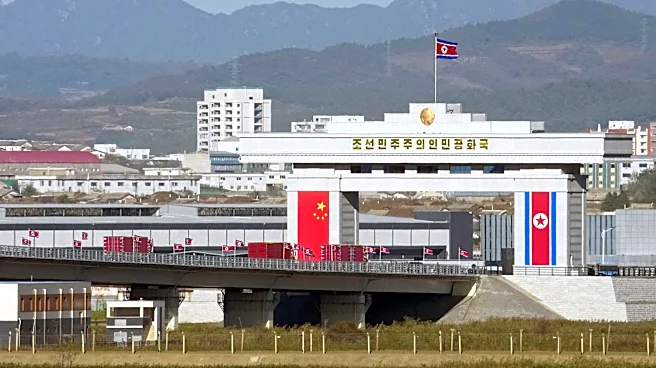
As of November 2023, 41 of these Annex 2 states have signed the treaty, and 35 have ratified it. However, the absence of ratification from eight of these states remains the primary obstacle. Among these, India, North Korea, and Pakistan have neither signed nor ratified the treaty. China, Egypt, Iran, Israel, and the United States have signed the treaty but have not yet ratified it. Russia, which had signed and ratified the treaty, subsequently withdrew its ratification, further complicating the path to entry into force. The treaty stipulates that it will enter into force 180 days after all 44 Annex 2 states have deposited their instruments of ratification.
Implications of Non-Ratification
The continued delay in the CTBT's entry into force has several significant implications. While the Preparatory Commission for the CTBTO continues to build and provisionally operate the global verification regime, including the International Monitoring System (IMS), its full authority and legal standing are limited without the treaty being formally in effect. This provisional status means that certain enforcement mechanisms, such as on-site inspections, cannot be fully implemented as outlined in the treaty. For instance, an on-site inspection can only take place after the treaty's entry into force and would require agreement by at least 30 of the 51 members of the CTBTO's Executive Council.
The lack of universal ratification among Annex 2 states also reflects persistent geopolitical tensions and differing national security priorities. For some states, concerns about verification capabilities, national sovereignty, or the perceived discriminatory nature of nuclear non-proliferation efforts contribute to their reluctance. The U.S. Senate's decision not to ratify the treaty in 1999, for example, has been a major factor in its stalled progress. Until these remaining Annex 2 states overcome their reservations and complete the ratification process, the CTBT will remain an aspirational agreement rather than a fully legally binding international law, leaving the world without a universally enforced ban on nuclear test explosions.