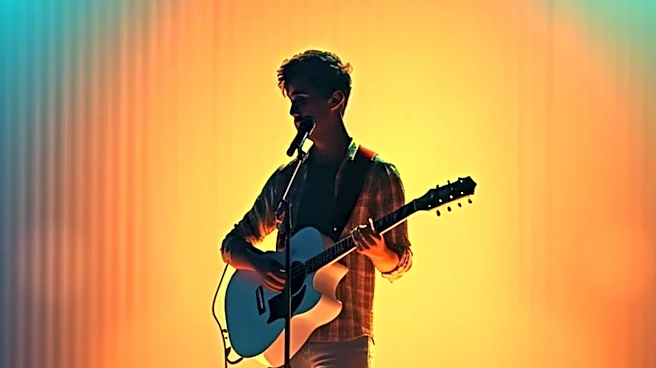






Samuel Robert Gibson, born on November 16, 1931, in Brooklyn, New York, emerged as a pivotal figure in the folk music revival of the late 1950s and early 1960s. Known primarily for his mastery of the banjo and 12-string guitar, Gibson's musical journey began after a chance encounter with Pete Seeger. This meeting inspired him to dedicate himself to folk music, leading him to quit his job and immerse himself in learning the banjo. His early career
saw him performing in various venues, from schools and social clubs to lounges and cruise ships, laying the groundwork for his significant impact on the folk scene.
Early Life and Musical Beginnings
Gibson's childhood was spent in various communities outside New York City, including Tuckahoe, Yorktown Heights, and Tompkins Corners. His initial interest in music was largely vocal. He left high school before graduating and embarked on a period of hitchhiking across the country. Upon returning to New York City in the late 1940s, he took a job in speed reading, handling sales and public relations. In 1952, he married Rose, and they soon had three daughters: Barbara (who later changed her name to Meridian Green), Pati, and Susan.
The turning point in Gibson's life came in 1953 when he met Pete Seeger and assisted him in rebuilding his house. Deeply impressed by Seeger and his music, Gibson made a significant decision: he used money he had saved for rent to purchase a banjo, much to his wife's dismay. He then quit his job to fully dedicate himself to studying folk music, teaching himself to play the banjo over the following year. By the age of 22, he was performing in diverse locations, from New York to Miami, Cleveland, and even on Caribbean cruise ships, before securing a booking at the Green Door in Michigan City, Indiana.
Rise to Prominence and Influence
In 1955, Gibson's career gained momentum when he was booked into Chicago's Off-Beat Room, where he met Albert Grossman. Grossman, recognizing Gibson's talent, opened the folk club Gate of Horn in 1956, where Gibson performed for eleven months. He started as an opener for other acts and eventually became a headliner. The Gate of Horn became a significant venue, hosting performers like Josh White, Glenn Yarborough, Odetta, Hamilton Camp, Judy Collins, and Joan Baez. Gibson played a crucial role in introducing Joan Baez to a national audience at the 1959 Newport Folk Festival.
Gibson's recognition in Chicago grew steadily in the early 1960s, partly due to his collaboration with Hamilton Camp. Their 1961 debut album, "Gibson and Camp at the Gate of Horn," released on Elektra Records, proved to be a watershed moment. This album significantly influenced a wide range of singers, including John Lennon, Gordon Lightfoot, and John Denver. For instance, Lightfoot's "Canadian Railroad Trilogy" was reportedly patterned after Gibson and Camp's "Civil War Trilogy." Gibson and Camp also became regular performers at the iconic Village Gate in New York City, which opened in 1958.
Collaborations, Later Career, and Personal Challenges
Art D'Lugoff, the owner of the Village Gate, once suggested that Gibson and Camp add a female voice to their duo. After they declined, he made the same recommendation to Peter Yarrow and Paul Stookey, leading to the formation of Peter, Paul and Mary. Yarrow later acknowledged Gibson's profound influence on their sound, stating, "When you listen to PPM, you are hearing Bob Gibson." Gibson also formed a close and prolific songwriting partnership with Shel Silverstein, then a cartoonist at Playboy. They wrote over 200 songs together over 35 years, with their last joint project being the 1993 album "Makin' A Mess."
Despite his artistic successes, Gibson's career was significantly impacted by his struggles with drug and alcohol addiction. After achieving sobriety, he attempted a comeback in 1978, but the musical landscape had shifted, and his traditional folk style was no longer as popular with younger audiences. Nevertheless, he continued his artistic endeavors, releasing albums, participating in musicals and plays, and making television appearances. In 1993, he was diagnosed with progressive supranuclear palsy (PSP), a disease he succumbed to on September 28, 1996, at the age of 64.