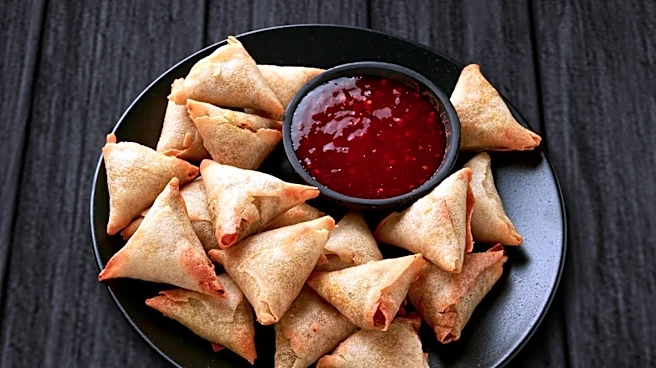






The samosa, a savory pastry enjoyed across vast swathes of the world, boasts a rich history that traces its origins back to Central Asia. This fried or baked delight, typically filled with a variety of savory ingredients, has evolved significantly over centuries, adapting to local tastes and culinary traditions as it spread across continents. From its early mentions in medieval Arab cookery books to its current status as a beloved street food and snack,
the samosa's journey is a testament to its enduring appeal and versatility.
Ancient Roots and Early Mentions
The samosa is believed to have originated in Central Asia, with its earliest known precursor appearing in the Middle East. Historical records indicate that a similar dish, the *sanbusaj*, was praised by the Abbasid-era poet Ishaq al-Mawsili. Recipes for this precursor can be found in Arab cookery books dating from the 10th to the 13th centuries, under various names such as *sanbusak*, *sanbusaq*, and *sanbusaj*. These names all derive from the Persian word *sanbosag*, meaning 'triangular pastry'. One 10th-century Arabic text, the *Kitab al-Tabikh*, even features *sanbusaj* in the same chapter as sausages, suggesting that the dough might have served as a substitute for intestine in some preparations.
In Iran, the dish maintained its popularity until the 16th century. By the 20th century, however, its presence in Iran became more restricted to specific provinces, such as the *sambusas* of Larestan. An Iranian historian, Abu'l-Fadl Bayhaqi (995–1077), also mentioned the dish in his historical writings, further solidifying its ancient lineage and widespread recognition in the region during that period.
Spread and Adaptation in the Indian Subcontinent
The samosa's journey to the Indian subcontinent marked a significant chapter in its history, where it gained immense popularity and underwent considerable adaptation. The English word "samosa" itself is derived from the Hindustani word *samosa*, which can be traced back to the Middle Persian *sambōsag*. Its savory flavor and convenient, pocket-sized form made it an ideal and readily available snack for workers and travelers throughout India, Pakistan, and Central Asia.
In the Indian subcontinent, samosas are typically prepared with an all-purpose flour dough, known locally as *maida*. The filling often consists of a mixture of diced or mashed boiled potatoes, onions, green peas, lentils, ginger, various spices, and green chilies. Depending on the filling, a samosa can be either vegetarian or non-vegetarian. The entire pastry is deep-fried to a golden-brown color and is commonly served hot, often as a street food known as *chaat*, accompanied by fresh chutneys. This method of preparation and serving has become iconic in the region.
Regional Variations Across Asia and Africa
The samosa's adaptability led to a multitude of regional variations as it spread beyond its Central Asian and Middle Eastern origins. In the eastern parts of India, including Assam, Odisha, West Bengal, Bihar, and Jharkhand, a popular snack known as *singara* or *shingra* is the local version of the samosa. These are generally smaller than the standard Indian variety and often contain fillings of cooked diced potato, peanuts, and sometimes even raisins. In Hyderabad, a distinct, smaller version with a thicker pastry crust and a minced meat filling is known as *lukhmi*.
Moving further east, in Bangladesh, both flat (triangular) and full-shaped (tetrahedron/triangular pyramid) samosas are popular. The Bengali full-shaped samosa, called *shingara*, is typically smaller and filled with potato pieces, vegetables, and nuts. In Nepal, samosas are called *singadas* in the eastern region due to their resemblance to a water caltrop, while the rest of the country uses the term "samosa." In Karachi, Pakistan, a unique *kaghazi samosa*, or