





Bangles, a distinctive form of jewelry worn on the wrist, hold a deep-rooted significance in the Indian subcontinent, extending far beyond mere adornment. These circular, inflexible ornaments have been an integral part of cultural practices, traditional attire, and even ancient art forms for millennia. From their earliest archaeological discoveries to their modern-day variations, bangles tell a story of evolving craftsmanship, enduring customs, and their central
role in the lives of women across the region.
Ancient Origins and Archaeological Discoveries
The history of bangles stretches back to ancient times, with archaeological evidence pointing to their presence as early as 2300–1750 BCE. Excavations across the Indian subcontinent have unearthed bangles crafted from a variety of materials, including sea shell, copper, bronze, gold, agate, and chalcedony. One of the most compelling pieces of evidence is a figurine of a dancing girl, dating back to 2600 BC, discovered at the Mohenjo-daro archaeological site in modern-day Pakistan, depicted wearing bangles on her left arm.
Further historical examples include copper bangles found at Mahurjhari, and decorated bangles from the Mauryan Empire (322–185 BC). The historic site of Taxila, dating to the 6th century BC, has also yielded gold bangle samples. These early artifacts, sometimes featuring copper rivets and gold-leaf inlay, demonstrate sophisticated craftsmanship and the long-standing importance of bangles in ancient Indian societies.
Cultural Significance and Traditional Practices
In the Indian subcontinent, bangles are more than just jewelry; they are often considered signs for traditional women and girls, deeply intertwined with cultural identity and life events. They are commonly worn by women, sometimes in pairs, with one or more on each arm, or several on a single wrist. While inexpensive plastic bangles are becoming more common, glass bangles remain a preferred choice for traditional occasions such as marriages and festivals, highlighting their enduring cultural value.
Bangles also play a vital role in various Indian dance forms, where their striking together can produce a rhythmic tone, adding an auditory dimension to the visual artistry. The tradition extends to specific customs, such as the wearing of white sea shell bangles by married Bengali and Oriya Hindu women. A special type, the "Bengali bangle," serves as a substitute for costly gold, created by fusing a thin gold strip onto a bronze bangle and then manually crafting it.
Materials, Design, and Modern Adaptations
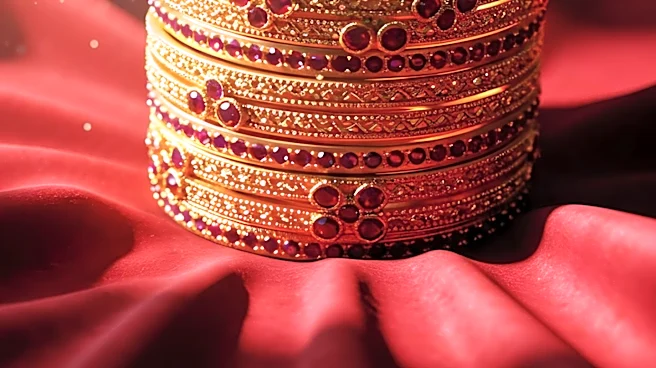
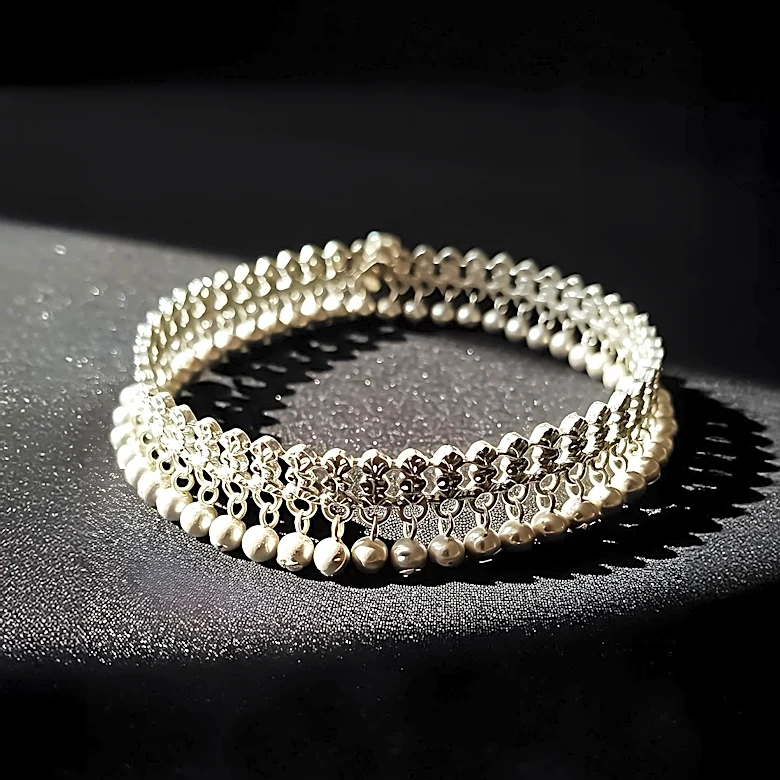
Traditionally, bangles are circular and inflexible, distinguishing them from other bracelets. The word itself is derived from the Hindi term "bungri," meaning glass. They are crafted from a wide array of materials, ranging from precious metals like gold, silver, and platinum, to non-precious ones such as glass, wood, ferrous metals, and plastic. Designs can vary from simple to intricately handmade, often adorned with precious and semi-precious stones like diamonds, gems, and pearls.
There are two primary types of bangles: a solid cylinder and a split, cylindrical spring opening/closing type. The material used is a key distinguishing factor, encompassing everything from jade to lac and even rubber. Lac bangles, made from a resinous material secreted by insects and molded in hot kilns, are among the oldest and most delicate types. In recent times, rubber bangles, worn more like wristbands by youngsters, and plastic ones have emerged, offering a trendy look. The value of bangles can also be influenced by additional work, such as embroidery, small glass pieces, paintings, or attached hangings, as well as the rarity and uniqueness of their color. The shift towards imitation bangles is also noted, particularly due to high gold prices, reflecting a modern adaptation while still honoring traditional aesthetics.