





Formula E, the premier open-wheel single-seater motorsport championship for electric cars, has seen remarkable technological advancements since its inaugural race in September 2014. The cars competing in this series have undergone significant generational changes, each bringing improvements in power, battery capacity, and overall performance. From the initial Spark-Renault SRT 01E to the upcoming Gen4, these electric racing machines continually push
the boundaries of electric vehicle technology in a competitive environment.
The Inaugural Generation: Spark-Renault SRT 01E (2014–2018)
The first generation of Formula E cars, used from the 2014–15 to the 2017–18 seasons, was the Spark-Renault SRT 01E. For the inaugural season, the FIA initially planned for various chassis manufacturers, but ultimately, the Spark-Renault SRT 01E was the only licensed model. Renault assembled the electric components, Dallara designed the chassis, and Spark Racing Technology handled the car's assembly. This initial car had a peak power output of 268 horsepower (200 kW) and was limited to 201 horsepower (150 kW) during races. It could accelerate from 0 to 62 mph in 3 seconds and reach a maximum speed of 140 mph.
In Season 2 (2015–16), the SRT 01E's design was opened up, allowing private teams to develop their own motor, gearbox, and rear suspension. The race power limit was increased to 228 horsepower (170 kW). By Season 3, the battery pack was upgraded, boosting peak power to 335 horsepower (250 kW) and increasing the peak regeneration rate by 50 kW to 150 kW. Despite the battery cells gaining 30 kg, the overall pack weight was reduced by 8 kilograms. Michelin also updated its tires to reduce rolling resistance and weight, while improving warm-up times. The front wing was also updated for better aesthetics and durability. For Season 4, the race power limit was further raised to 241 horsepower (180 kW). During the first season, all teams utilized an electric motor developed by McLaren, similar to the one in its P1 supercar. However, from the second season onward, powertrain manufacturers were permitted to build their own electric motor, inverter, gearbox, and cooling system, while still using the standardized chassis and battery.
The Gen2 Era: Enhanced Performance and Battery Life (2018–2022)
The second-generation, or “Gen2,” Formula E car was introduced in the 2018–19 season (Season 5) and brought significant technological advancements. Its 54 kWh battery and peak power output increased from 268 to 335 horsepower (200 to 250 kW), with top speeds reaching approximately 174 mph (280 km/h). A major change with the Gen2 car was the elimination of mid-race car-swaps, as the new battery, produced by McLaren Applied Technologies and Atieva, had roughly double the capacity of its predecessor. These cars were equipped with Brembo braking systems, chosen by Spark Racing Technology as the sole supplier, and featured the halo safety cage to protect the driver's head. Michelin continued as the tire manufacturer, supplying all-weather treaded tires.
For Season 8, the race power was increased to 220 kW, and the "Attack Mode" power was raised to 250 kW. The Gen2 car era concluded with the 2021–22 season. The Gen2Evo, an updated version planned for the Gen2, was never raced due to the COVID-19 pandemic, though renders of its design exist. The Gen2 car represented a crucial step in Formula E's development, showcasing the growing capabilities of electric racing technology and making the races more dynamic by removing the car-swap pit stops.
The Gen3 and the Future: Gen4 (2022 Onwards)
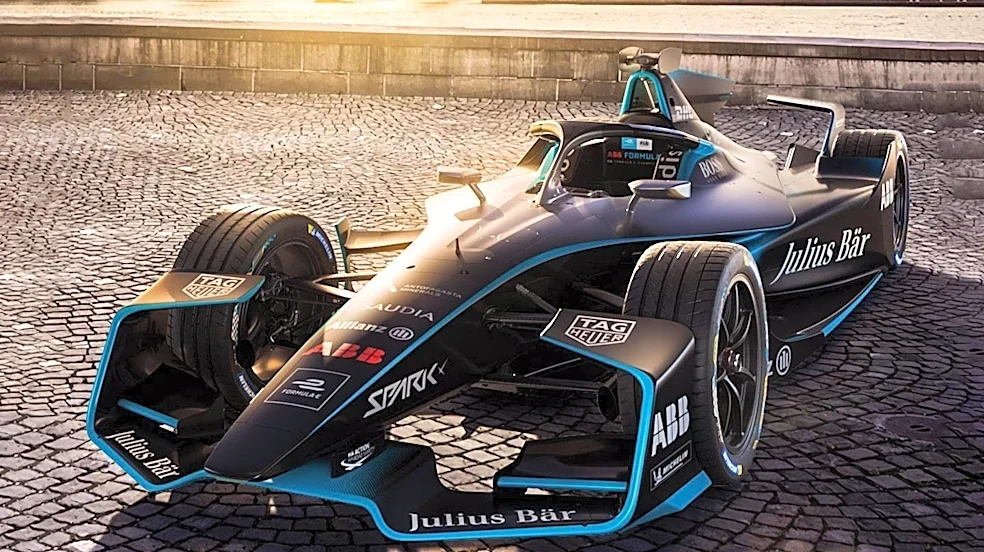
The Gen3 Formula E car was unveiled at the 2022 Monaco ePrix for use from the ninth Formula E season (2022–23) onward. This generation saw power levels of 469 horsepower (350 kW) in qualifying and 402 horsepower (300 kW) in races. Regeneration was allowed on both front (250 kW) and rear (350 kW) axles, enabling a maximum of 600 kW recovery under braking, with regenerative braking potentially providing 40% of the total energy used in a race. The estimated top speed for the Gen3 car is 200 mph (322 km/h). Its battery is designed for "ultra-fast charging" at up to 600 kW, allowing for pitstop recharging in the championship for the first time. The wheelbase was reduced from 3100 mm to 2970 mm, and the weight was lowered to 760 kg.
Looking ahead, the fourth generation, the Formula E Gen4, is planned to debut in the 2026-27 season. Unveiled on November 5, 2025, the Gen4 is designed for a significant performance uplift. It will feature permanent all-wheel drive, a peak power output of 805 horsepower (600 kW) in qualifying and Attack Mode, and 603 horsepower (450 kW) during races, representing a 50 percent power increase over the Gen3 Evo model. The Gen4 car's enhanced power, downforce, and tire grip are expected to surpass the pace of contemporary Formula 2 cars. It will also feature two aerodynamic configurations: high-downforce for qualifying and low-drag for races. The new 55 kWh battery, supplied by Podium Advanced Technologies, will provide 51.25 kWh of usable energy and up to 700 kW of regenerative braking. Sustainability is also a focus, with each car built from at least 20% recycled materials and designed to be fully recyclable after use. Power steering will be added for the first time in a Formula E car, and Bridgestone will supply wider tires, including a dedicated wet weather tire. The 2026-27 season will mark a major overhaul in technical rules as the Gen3 Evo package is replaced by the Gen4 car, continuing the rapid evolution of Formula E technology.