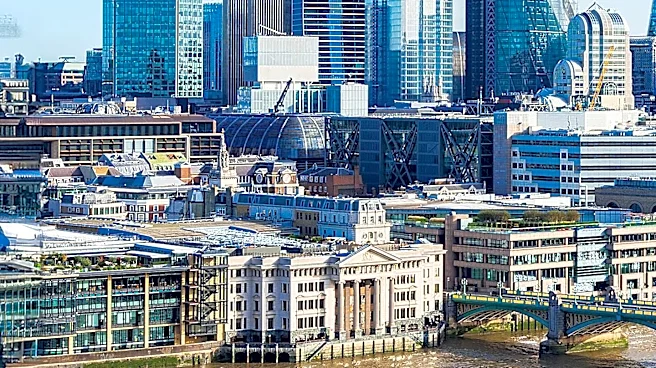





London's geographic location on the River Thames has played a crucial role in its development as a major economic center. The city's position as a port has influenced its growth and expansion over the centuries. This article explores the geographic features of London and their impact on the city's economic development.
The River Thames
The River Thames is central to London's geography and history. As a navigable river, it has facilitated trade and transportation, making
London a key port city. The city initially developed on the north bank of the Thames, with London Bridge being the only bridge for many centuries. This limited the city's expansion to the north side of the river.
In the 18th century, the construction of additional bridges allowed London to expand in all directions. The flat or gently rolling countryside surrounding the city presented no obstacles to growth, enabling London to become the largest urban area in the United Kingdom.
Economic Development
London's geographic advantages have contributed to its economic development. The city became a major center for banking, international trade, and commerce by the late 16th century. The Royal Exchange, founded in 1565, served as a hub for merchants and gained Royal patronage in 1571.
The Bank of England's relocation to its current site in 1734 further solidified London's status as a financial center. The city's insurance sector, particularly in Lime Street, has also been a significant contributor to its economy. Lloyd's Coffee House, established in 1691, became the world-leading insurance market.
Modern Economic Influence
Today, London continues to be a global economic powerhouse. Its geographic location and historical development have positioned it as a leader in finance and commerce. The city's insurance sector remains concentrated in the area around Lime Street, and the Royal Exchange's location at Cornhill and Threadneedle Street is still considered the geographical center of London's banking and financial services.
London's economic influence extends beyond its borders, impacting global markets and industries. The city's ability to adapt and grow over the centuries has ensured its place as a key player in the global economy, driven by its strategic geographic position and historical development.