





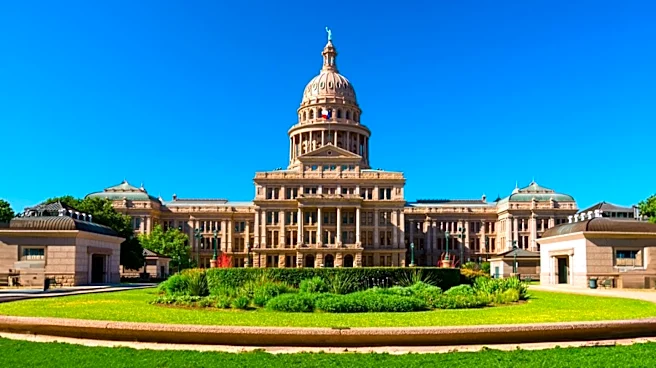

Lyndon B. Johnson's journey from a modest upbringing in Texas to the highest office in the United States is a story of ambition, resilience, and political acumen. Born in Stonewall, Texas, Johnson's early life was marked by financial struggles, yet he managed to carve a path that led him to the presidency. His career in politics was characterized by strategic moves and a deep understanding of the political landscape, which enabled him to rise through
the ranks and ultimately succeed John F. Kennedy as President.
Early Life and Education
Johnson's early years were spent in a land described as "without electricity, where the soil was so rocky that it was hard to earn a living from it." Despite these challenges, he was a talkative youth who excelled in public speaking and debate, graduating from Johnson City High School. Pressured by his parents to pursue higher education, Johnson enrolled at Southwest Texas State Teachers College, where he honed his skills in persuasion and political organization.
His time at college was interrupted by a stint teaching Mexican-American children at the segregated Welhausen School in Cotulla, Texas. This experience left a lasting impression on Johnson, motivating him to ensure that the door to knowledge remained open to all Americans. He graduated in 1930 with a Bachelor of Science in history and a teaching certificate, briefly teaching at Pearsall High School before moving to Houston.
Political Ascent
Johnson's political career began in earnest when he was elected to the U.S. House of Representatives in 1937. His rise was swift; by 1951, he was Senate majority whip, and by 1954, he had become the Senate majority leader. Johnson's ability to gather information and persuade his colleagues was legendary, earning him a reputation as one of the most effective Senate leaders in history.
His ambition was evident in his strategic maneuvers, such as his controversial victory in the 1948 Democratic primary for the U.S. Senate election in Texas. Despite allegations of electoral fraud, Johnson's victory solidified his position in the Senate and paved the way for his future political endeavors.
Vice Presidency and Presidency
In 1960, Johnson was selected as John F. Kennedy's vice presidential running mate, a move that surprised many. The Kennedy-Johnson ticket won the election, and Johnson assumed the presidency in 1963 following Kennedy's assassination. His presidency was marked by significant domestic achievements, including the passage of major civil rights legislation, although his foreign policy, particularly the escalation of the Vietnam War, drew criticism.
Johnson's legacy is complex, with historians ranking him highly for his domestic policy accomplishments while criticizing his handling of the Vietnam War. His journey from a poor Texan boy to a powerful political figure is a testament to his determination and political savvy.