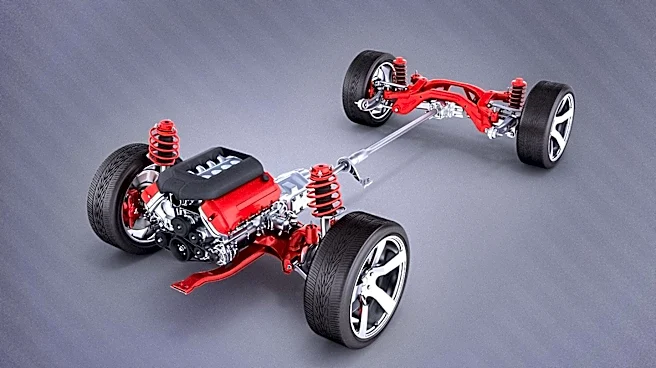










Wheel alignment is a critical aspect of vehicle maintenance that directly impacts a car's handling, safety, and the lifespan of its tires. It involves the precise adjustment of various geometric angles of the wheels. Beyond just preventing abnormal tire wear, proper alignment ensures that a vehicle maintains stable handling characteristics and travels in a straight line without veering to one side. This intricate process relies on specific measurements
and modern technology to achieve optimal results.
Modern Measurement Systems for Precision
During vehicle inspections, manufacturers typically require that wheel alignment angles remain within specified tolerances. To meet these precise requirements, modern wheel alignment monitoring systems employ advanced technology. These systems utilize embedded sensors that are designed to accurately measure the orientation and motion characteristics of the vehicle or its wheels. This data is then processed by sophisticated software.
The software plays a crucial role in estimating the current wheel alignment conditions. It can detect any misalignments by analyzing the sensor data, providing technicians with the information needed to make precise adjustments. This technological approach ensures a high degree of accuracy, which is essential for correcting even subtle deviations that could otherwise lead to significant issues over time. The ability to precisely measure these angles is what allows for the fine-tuning necessary for optimal vehicle performance.
The Importance of Maintaining Proper Alignment
Maintaining proper wheel alignment is not just about smooth driving; it's also a significant factor in the longevity of a vehicle's tires and its overall operational efficiency. When wheels are misaligned, tires can experience uneven wear patterns, leading to premature replacement. This not only incurs additional costs for the vehicle owner but also contributes to environmental waste.
Beyond tire wear, incorrect alignment can compromise a vehicle's handling. A car that pulls to one side or exhibits unstable steering can be more challenging and potentially dangerous to drive. Proper alignment ensures that the vehicle responds predictably to steering inputs, enhancing driver confidence and safety. While specialized applications like motorsport might intentionally alter alignment for specific performance gains, for everyday driving, adhering to manufacturer specifications through regular alignment checks is paramount for a balanced and safe driving experience.