

Warren Edward Spahn, a left-handed professional baseball pitcher, carved out an illustrious career spanning 21 seasons in Major League Baseball (MLB). Most notably associated with the Boston Braves, and later the Milwaukee Braves after their relocation, Spahn's career was marked by remarkable consistency, numerous accolades, and memorable moments on the mound. His journey, interrupted by military service during World War II, saw him become one of the sport's
most dominant figures, leaving behind a legacy that continues to be celebrated.
Early Dominance and Consistent Excellence
Spahn's talent became evident early in his career. His first full season as a starting pitcher in 1947 was a breakout year, where he led the National League in earned run average (2.33), shutouts (7), and innings pitched (289 2/3), all while compiling an impressive 21–10 record. This season marked the beginning of an extraordinary run, as it was the first of his thirteen 20-win seasons, a testament to his durability and skill. He would go on to secure two more ERA titles in 1953 and 1961, further solidifying his reputation as an elite pitcher.
His consistent excellence was a hallmark of his career. From 1949 to 1952, Spahn led the National League in strikeouts for four consecutive seasons, sharing the title with Don Newcombe in 1951. This period also included a single-game high of 18 strikeouts in a 15-inning appearance on June 14, 1952, showcasing his ability to dominate hitters over extended periods. Spahn's ability to maintain such a high level of performance for so long was a key factor in his legendary status.
Memorable Encounters and Historic Feats
Spahn's career is dotted with several memorable encounters and historic achievements. In 1951, he allowed the first career hit to future Hall of Famer Willie Mays, a home run. Mays had started his career 0-for-12, and Spahn's witty response to reporters after the game became famous: "Gentlemen, for the first 60 feet, that was a hell of a pitch," referring to the distance between home plate and the pitcher's mound. He later joked, "I'll never forgive myself. We might have gotten rid of Willie forever if I'd only struck him out." Interestingly, in 1962, another Hall of Famer, Sandy Koufax, hit his first career home run off Spahn, a rare feat for Koufax who only hit one other.
Beyond these anecdotes, Spahn achieved two no-hitters late in his career. He threw his first no-hitter against the Philadelphia Phillies on September 16, 1960, at the age of 39. The following year, on April 28, 1961, he pitched his second no-hitter against the Giants. These accomplishments, coming at an age when many pitchers have retired, underscored his exceptional talent and longevity.
The "Pray for Rain" Era and Beyond
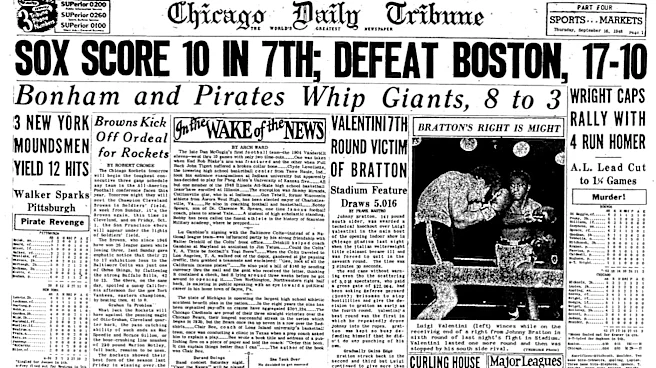
Spahn was a key figure in the Boston Braves' 1948 pennant-winning team, alongside his teammate Johnny Sain. While Sain was considered the ace with a 24–15 record, Spahn contributed significantly with a 15–12 record. The team's reliance on these two pitchers inspired Gerald V. Hern's famous poem, which became condensed into the popular phrase "Spahn and Sain and Pray for Rain." This era highlighted Spahn's role as a foundational pitcher for the Braves.
His career extended well beyond this period. In 1957, Spahn was the ace of the champion Milwaukee Braves, and he also pitched on two other Braves pennant winners in 1948 and 1958. During the last two seasons of his career, Spahn held the distinction of being the oldest active player in baseball, only briefly losing this title for a single day in 1965 when 58-year-old Satchel Paige pitched three innings. His remarkable endurance led Stan Musial to quip, "I don't think Spahn will ever get into the Hall of Fame. He'll never stop pitching," a testament to his seemingly ageless ability.