





Comet Hale–Bopp captured the world's attention in 1997 as it became one of the brightest and most visible comets of the 20th century. Its appearance in the night sky was a spectacular event that drew widespread public interest and scientific study. The comet's visibility and the role of the internet in sharing its progress made it a unique astronomical phenomenon that left a lasting legacy.
The Comet's Journey to Perihelion
Comet Hale–Bopp became visible to the naked eye in May 1996,
and its brightness continued to increase as it approached perihelion, the point in its orbit closest to the Sun. Although its rate of brightening slowed in the latter half of 1996, scientists remained optimistic about its potential brilliance. By January 1997, the comet was bright enough to be seen even from large cities with light-polluted skies.
As the comet approached the Sun, it continued to brighten, reaching 2nd magnitude in February 1997. It developed a pair of tails, with a blue gas tail pointing straight away from the Sun and a yellowish dust tail curving along its orbit. On March 9, a solar eclipse in parts of Asia allowed observers to see the comet during the daytime, further enhancing its visibility and appeal.
Public Fascination and the Role of the Internet
The appearance of Comet Hale–Bopp coincided with the rise of the internet, which played a significant role in generating public interest. Numerous websites tracked the comet's progress, providing daily images and updates from around the world. This unprecedented access to information allowed people to follow the comet's journey and contributed to its status as a cultural phenomenon.
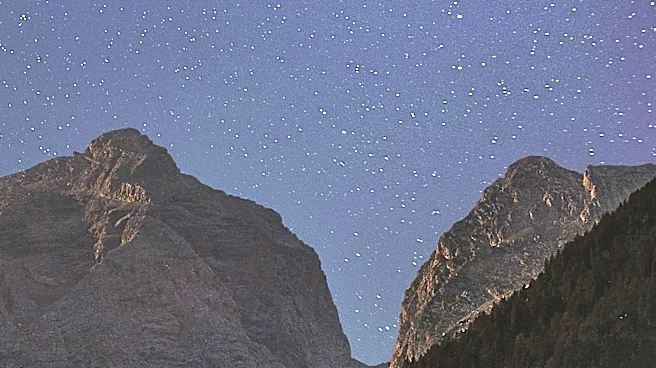
The comet's closest approach to Earth occurred on March 22, 1997, at a distance of 1.315 AU. As it passed perihelion on April 1, 1997, Hale–Bopp became a spectacular sight, shining brighter than any star in the night sky except Sirius. Its dust tail stretched 40 to 45 degrees across the sky, making it visible well before the sky was fully dark each night.
A Lasting Legacy
Comet Hale–Bopp's visibility and brightness made it a memorable event for both amateur and professional astronomers. It remained visible to the naked eye for 569 days, setting a record for the longest period of visibility for a comet. The previous record had been held by the Great Comet of 1811, which was visible for about nine months.
The comet's appearance also highlighted the contributions of amateur astronomers, as it was discovered independently by two amateurs, Alan Hale and Thomas Bopp. Their discovery and the subsequent public interest in the comet underscored the importance of amateur contributions to the field of astronomy. Comet Hale–Bopp remains a symbol of the wonder and beauty of the night sky, inspiring future generations to look up and explore the universe.