




Parivritta Anjaneyasana, often known as Revolved Anjaneyasana or Revolved Low Lunge, represents a significant variation of the foundational Anjaneyasana. This pose introduces a spinal twist, adding a new dimension to the traditional lunge and serving as a crucial preparatory posture for more complex revolved asanas. Understanding Parivritta Anjaneyasana involves appreciating its unique mechanics, its benefits as a twisting pose, and its place within
a broader sequence of yoga postures. It is a pose that challenges balance and flexibility while also promoting spinal mobility.
Mechanics of the Revolved Low Lunge
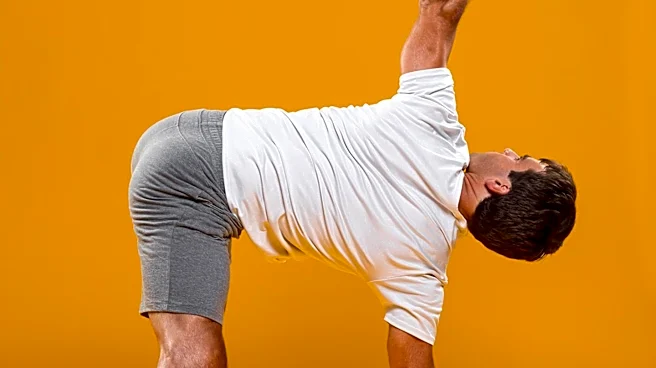
Parivritta Anjaneyasana is essentially a rotated form of Anjaneyasana. The pose begins from the low lunge position, where one leg is bent forward with the knee over the ankle, and the other leg is extended back with the knee resting on the floor. The key distinguishing feature of Parivritta Anjaneyasana is the twist. To achieve this, the practitioner brings the elbow opposite to the bent forward knee across the body. For instance, if the right leg is forward and bent, the left elbow would cross over to the outside of the right knee. This action initiates a rotation in the torso, with the gaze often directed upwards or to the side, following the twist.Crucially, in this specific variation, the rear knee remains on the floor. This grounding element provides stability, allowing the practitioner to focus on deepening the spinal rotation without the added challenge of balancing on a raised back leg. This makes it an accessible twisting pose that can be practiced by many, offering a gentle yet effective way to mobilize the spine and open the chest. The engagement of the core muscles is also vital in maintaining the twist and protecting the lower back.
A Preparatory Pose for Deeper Twists
One of the primary roles of Parivritta Anjaneyasana in modern yoga is its function as a preparatory pose for Parivritta Parsvakonasana, or Revolved Side Angle Pose. In Parivritta Parsvakonasana, the rear knee is lifted off the floor, demanding greater strength, balance, and flexibility in the hamstrings and hips. By practicing Parivritta Anjaneyasana first, individuals can gradually build the necessary spinal mobility and core engagement required for the more advanced variation.The stability offered by the grounded back knee in Parivritta Anjaneyasana allows practitioners to explore the depth of their twist safely. This gradual progression is a hallmark of many yoga practices, where foundational poses build the necessary physical and energetic groundwork for more challenging postures. The twist in Parivritta Anjaneyasana helps to lengthen and decompress the spine, preparing it for the increased demands of a full revolved side angle pose where the entire body is engaged in a dynamic twist.
Variations and Related Postures
While Parivritta Anjaneyasana itself is a variation of Anjaneyasana, it also exists within a family of twisting poses. The concept of rotating the torso while in a lunge position is common across various yoga styles. The pose emphasizes the connection between the lower body's stability and the upper body's mobility. The arms can be configured in several ways during the twist; often, the hands are brought into a prayer position at the chest, with the top elbow pressing against the knee to deepen the rotation. Alternatively, the lower hand might reach towards the floor or the outside of the front foot, while the upper arm extends towards the sky, further opening the chest and shoulders.This pose, by encouraging a deep twist, can also influence other aspects of a yoga practice, such as breath awareness. The compression and expansion of the torso during a twist can bring attention to the breath, making it a valuable posture for developing pranayama skills. Its inclusion in sequences often aims to detoxify the body, improve digestion, and enhance overall spinal health, making it a multifaceted posture in the yoga repertoire.