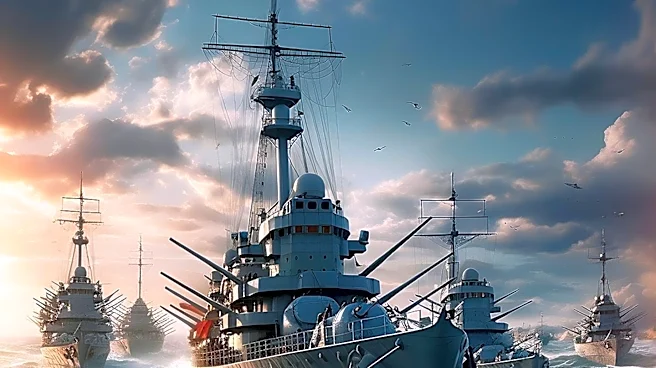







The Great White Fleet was a remarkable demonstration of American naval power, orchestrated by President Theodore Roosevelt. This fleet of 16 battleships embarked on a global journey from December 16, 1907, to February 22, 1909. The voyage was not only a display of military strength but also a diplomatic mission that spanned six continents and covered approximately 43,000 nautical miles. The fleet's journey was a significant event in naval history,
showcasing the United States' growing influence on the world stage.
Setting Sail
The Great White Fleet set sail from Hampton Roads, Virginia, under the command of Rear Admiral Robley D. Evans. The fleet's first leg took it to Trinidad, followed by stops in Rio de Janeiro, Brazil, and Punta Arenas, Chile. The fleet's journey was a logistical feat, requiring careful planning and coordination. The ships were accompanied by a torpedo flotilla of six destroyers and several auxiliary ships, which followed their own itinerary to San Francisco.
The fleet's arrival in San Francisco marked the end of the first leg of the journey. Here, Rear Admiral Charles S. Sperry took over command due to Admiral Evans' health issues. The fleet's composition was adjusted, with newer and more capable ships grouped together. This reorganization was crucial for the fleet's continued success as it prepared for the next stages of its journey.
Across the Pacific
After departing San Francisco, the fleet continued its journey across the Pacific Ocean. The ships visited Honolulu, Hawaii, before making their way to Auckland, New Zealand. The fleet's presence in these ports was met with enthusiasm and curiosity, as it represented a rare opportunity for many to witness the might of the U.S. Navy firsthand.
The fleet's journey continued to Sydney and Melbourne in Australia, where it was warmly received. The visit to Australia was a significant diplomatic success, strengthening ties between the United States and the Commonwealth nations. The fleet then proceeded to Manila in the Philippines and Yokohama in Japan, further cementing America's presence in the Pacific region.
The Final Leg
The final leg of the Great White Fleet's journey took it through the Suez Canal and into the Mediterranean Sea. The fleet made stops in Colombo, Ceylon, and Suez, Egypt, before heading to Gibraltar. During this time, the fleet provided assistance in the aftermath of a devastating earthquake in Sicily, showcasing the humanitarian capabilities of the U.S. Navy.
The fleet's return to Hampton Roads on February 22, 1909, marked the successful completion of its global voyage. President Roosevelt reviewed the fleet, celebrating its achievements and the valuable lessons learned. The journey of the Great White Fleet was a testament to American naval prowess and a pivotal moment in the history of U.S. foreign policy.