



Carl William Mays embarked on a remarkable journey through professional baseball, spanning 15 seasons from 1915 to 1929. Born in Atterson, Kentucky, in 1891, Mays rose from humble beginnings to become a celebrated pitcher, accumulating over 200 career wins and contributing to four World Series championship teams. His path was not without its challenges, including personal loss, military service, and a career-defining tragedy, yet his resilience and distinctive
talent left an indelible mark on the sport. Mays's story is a testament to a pitcher's dedication and evolution through a pivotal era of baseball history.
Early Life and Professional Beginnings
Carl Mays's early life was shaped by a strict Methodist upbringing, influenced by his father, a minister. This religious foundation instilled in him a principle that would later become notable in his career: a refusal to pitch on Sundays, a stance he shared with the esteemed pitcher Christy Mathewson. A significant turning point in his youth occurred when his father died when Mays was 12. This loss led his mother to move the family to Kingfisher, Oklahoma, and Mays reportedly internalized his grief, developing a "surly persona" and maintaining few close friends, particularly within the baseball world.
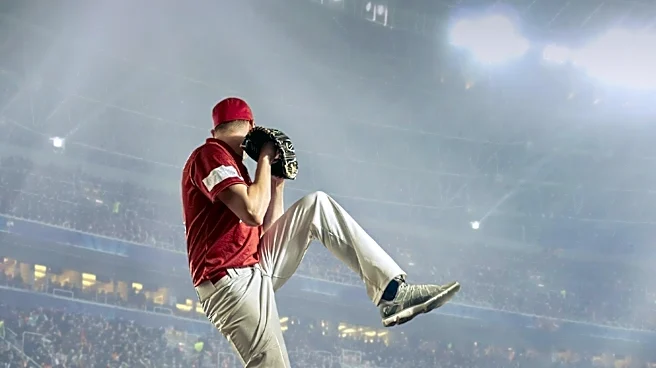
Mays's baseball career began before he even graduated high school, as he started earning a living playing for semi-pro teams across Oklahoma, Kansas, and Utah. His talent soon led him to the minor leagues, starting with the Boise, Idaho, team in the Class D Western Tri-State League in 1912. After a season in Boise, he moved to the Portland, Oregon, team in the Class A Northwest League in 1913. His progression continued in 1914 when he was drafted by the Triple-A International League's Providence Grays. The Grays, an affiliate of the Detroit Tigers, eventually sold his contract to the Boston Red Sox, paving his way to the major leagues. It was during these formative years that Mays developed his distinctive underhand, or submarine, pitching style, a technique he may have learned from pitchers like Dizzy Dismukes or Joe McGinnity.
Red Sox Success and Wartime Interruption
Mays made his Major League debut with the Boston Red Sox in 1915, appearing in 34 games, mostly in relief, and finishing with a 6-5 record. He quickly established himself as a valuable asset. In 1916, he started 24 of his 44 appearances, completing 18 games and posting an 18-13 record with a 2.39 ERA. That year, the Red Sox defeated the Brooklyn Robins in the World Series, though Mays was the losing pitcher in Game 3. His performance continued to improve, and in 1917, he achieved a 22-9 record with an impressive 1.74 ERA, helping the Red Sox to a second-place finish.
The pinnacle of his Red Sox career came in 1918, when he went 22-13 with a 2.21 ERA. The Red Sox returned to the World Series and defeated the Chicago Cubs in six games, with Mays earning victories in Games 3 and 6, both by scores of 2-1. Shortly after this triumph, Mays married and then enlisted in the United States Army for World War I. He departed for St. Louis as the leader of a group of 18 men, sworn in just five days before the Armistice. While stationed at Washington University as part of the Student Army Training Corps, an influenza outbreak occurred, claiming the lives of several individuals from his train trip. Fortunately, the Armistice ended the need for further expansion of the Army, and Mays was discharged in time to begin the 1919 baseball season.
Transition to the Yankees and Enduring Legacy
Despite his established status as a premier pitcher, Mays began the 1919 season with a challenging 5-11 record for the Red Sox. This slow start led to his trade to the New York Yankees in July of that year. The move proved beneficial, as Mays went 9-3 after the trade, finishing the combined season with a 14-14 record. He truly regained his dominant form in 1920, achieving a remarkable 26-11 record, including 26 complete games, as the Yankees finished just three games out of first place. This resurgence continued into 1921, where he recorded an outstanding 27 wins, further solidifying his reputation as one of the game's top pitchers.
While his career was marked by the tragic death of Ray Chapman in 1920, an event that led to the ban of the spitball, Mays's overall journey showcases a career of significant achievement and adaptation. He was an exceptional fielder and even capable enough with the bat to be used as a pinch-hitter. His 15 seasons in the major leagues, his more than 200 wins, and his four World Series rings attest to a long and successful career. Carl Mays's journey from a small Kentucky town to the grand stage of Major League Baseball, navigating personal challenges and professional controversies, ultimately cemented his place as a complex yet accomplished figure in the annals of the sport.