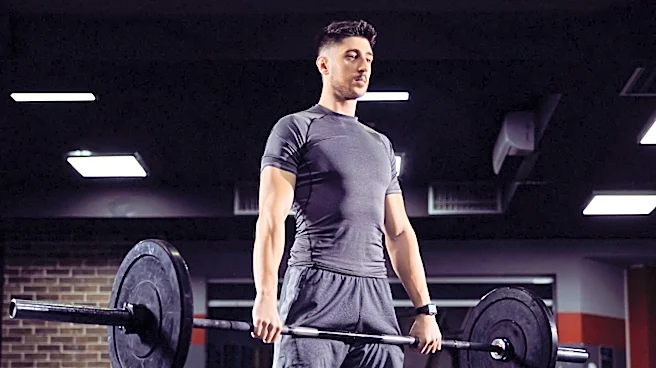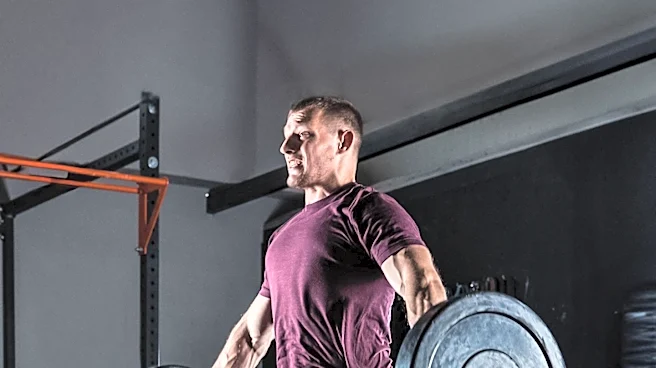




The stiff-legged deadlift stands as a specialized variation within the broader category of deadlift exercises, distinguished by its unique biomechanics and targeted muscle engagement. Unlike its conventional counterpart, this exercise minimizes knee flexion, placing a greater emphasis on the hamstrings, glutes, and lower back. It is a fundamental movement for those looking to specifically strengthen the posterior chain, contributing to overall core
stability and spinal health. Understanding its setup and execution is key to harnessing its benefits for both strength development and injury prevention.
Understanding the Mechanics and Setup
The primary characteristic that defines the stiff-legged deadlift is the limited movement at the knee joint. While a conventional deadlift involves significant knee bend, the stiff-legged version maintains the knees at an angle of approximately 160 degrees, a notable difference from the 135-degree angle seen in a standard deadlift. This subtle yet crucial alteration in knee angle shifts the mechanical advantage, directing more of the workload to the muscles at the back of the thigh and the lower spine.
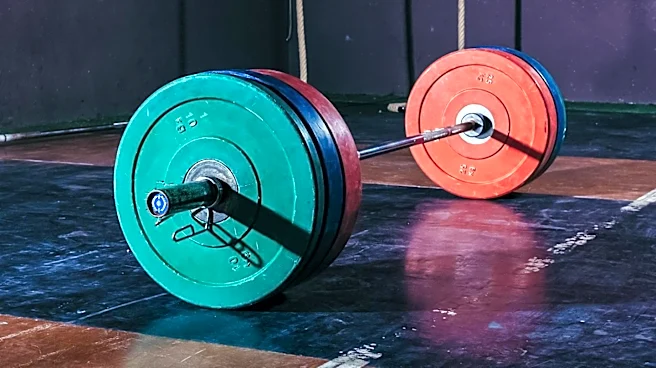
To initiate the exercise, the bar begins on the floor, similar to a traditional deadlift. The individual sets up in a familiar deadlift stance, but with the aforementioned knee angle. This setup ensures that the hamstrings are under greater tension from the start of the lift, as they are less assisted by the quadriceps due to the straighter leg position. The movement then involves lifting the weight off the floor while maintaining this relatively straight leg posture, emphasizing a hip hinge motion rather than a squatting movement.
Targeted Muscle Activation and Benefits
The stiff-legged deadlift is particularly effective for increasing activation in several key muscle groups. The hamstrings, located at the back of the thigh, experience heightened engagement due to the reduced knee flexion. Similarly, the gluteal muscles, or glutes, are heavily recruited as they work in conjunction with the hamstrings to extend the hips. The lower back, specifically the spinal erector muscles, also plays a crucial role, not only in lifting the weight but also in stabilizing the spine throughout the movement.
Strengthening the spinal erector muscles is a significant benefit of this exercise. These muscles are vital for maintaining spinal integrity and contribute directly to core stability, which is essential for nearly all physical activities and for preventing back injuries. By engaging these muscles under load, the stiff-legged deadlift helps build a resilient and strong lower back, supporting overall functional strength.
Versatility and Alternative Implementations
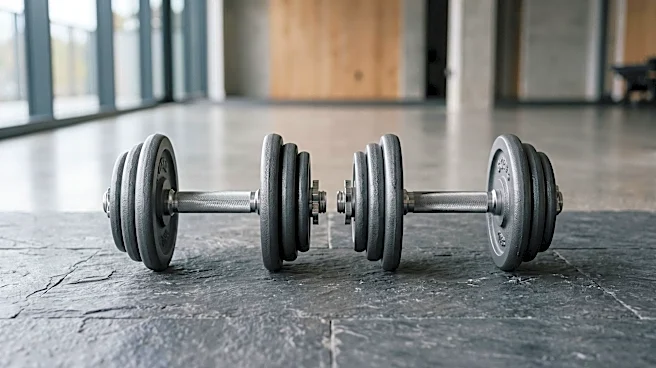
Beyond its primary role with a barbell, the stiff-legged deadlift offers versatility in its application and can be performed with various implements. It serves as an effective alternative exercise when using odd implements such as dumbbells. When performed with dumbbells, the arms hang down naturally, differing from exercises where resistance might be held up at one's back.
In these variations, the pressure on the back is still substantial, exerted through the weight held in the hands and supported by the back musculature. This includes major muscles like the latissimus dorsi, which are large muscles of the back, as well as the trapezius and rhomboids, which are involved in upper back and shoulder blade stability. This adaptability makes the stiff-legged deadlift a valuable exercise for a wide range of training scenarios and equipment availability, consistently targeting the posterior chain and core stabilizers.