







Apollo 15, launched on July 26, 1971, represented a pivotal moment in the history of lunar exploration. As the first of the J missions, it marked a shift towards extended lunar stays and a greater emphasis on scientific research. This mission set the stage for future lunar exploration by introducing new technologies and methodologies that expanded the scope of what could be achieved on the Moon.
The Introduction of the Lunar Roving Vehicle
One of the most significant advancements of Apollo 15
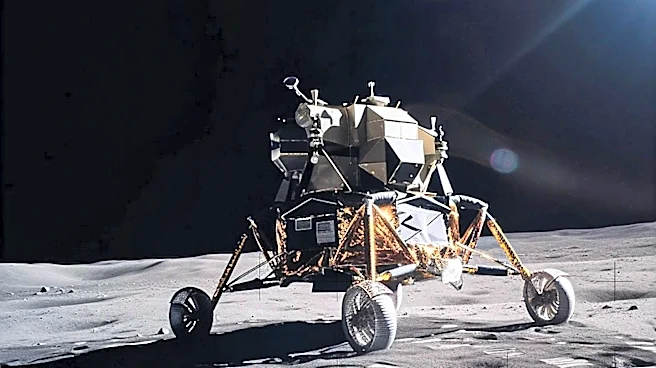
was the introduction of the Lunar Roving Vehicle (LRV). This vehicle allowed astronauts to travel further from the Lunar Module than ever before, significantly increasing the range of exploration. The LRV enabled Commander David Scott and Lunar Module Pilot James Irwin to conduct extensive geological surveys and collect a diverse array of lunar samples.
The LRV was a technological marvel, designed to operate in the harsh lunar environment. It could be folded into a compact space for transport and then deployed on the Moon's surface. With each wheel powered by an independent electric motor, the LRV provided the mobility needed to explore the lunar landscape effectively. This innovation was crucial for the success of the mission's scientific objectives.
Extended Lunar Stay and Scientific Focus
Apollo 15 was the first mission to allow for an extended stay on the lunar surface, with Scott and Irwin spending over 18 hours conducting extravehicular activities (EVAs). This extended duration enabled the astronauts to conduct more in-depth scientific research and collect a larger quantity of lunar material, totaling 170 pounds.
The mission's scientific focus was further enhanced by the deployment of a lunar subsatellite, which collected data on the Moon's plasma, particle, and magnetic field environment. This data provided valuable insights into the Moon's geological history and its interaction with the space environment, contributing to a deeper understanding of our celestial neighbor.
Paving the Way for Future Missions
The success of Apollo 15 paved the way for future lunar missions, demonstrating the feasibility and value of extended stays and scientific exploration. The mission's achievements highlighted the importance of integrating scientific research into space exploration, setting a precedent for subsequent missions.
Apollo 15's innovations and accomplishments marked a new era in lunar exploration, showcasing the potential for scientific discovery on the Moon. The mission's legacy continues to influence space exploration today, as NASA and other space agencies build on its successes to explore further into our solar system. By pushing the boundaries of what was possible, Apollo 15 laid the groundwork for the continued exploration of the Moon and beyond.