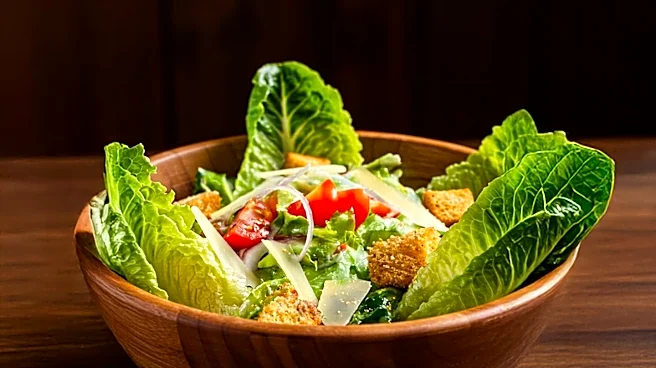







The Caesar salad is renowned for its distinctive dressing, a complex blend of flavors that has captivated palates for decades. At its core, the salad consists of romaine lettuce and croutons, but it is the dressing that truly defines it. The original recipe, created by Caesar Cardini in 1924, featured lemon juice, olive oil, eggs, Worcestershire sauce, garlic, Dijon mustard, Parmesan cheese, and black pepper. A notable aspect of this initial formulation
was the absence of anchovies, a detail that has sparked much discussion and evolution in subsequent versions of the salad.
The Original Formulation and the Anchovy Debate
Caesar Cardini's original Caesar salad recipe, developed in Tijuana, Mexico, did not include anchovies as a direct ingredient. This fact is a key point of historical interest, as many modern interpretations of the Caesar salad dressing prominently feature anchovies or anchovy paste. Cardini himself reportedly disliked anchovies, which influenced his initial recipe.However, the original recipe did incorporate Worcestershire sauce, an ingredient known to contain anchovies. This suggests that while Cardini avoided adding whole anchovies or anchovy paste directly, a subtle anchovy flavor was still present through the Worcestershire sauce. The unique flavor of Worcestershire sauce, combined with its slightly fermented nature, was believed to mask the anchovy taste, aligning with Cardini's preference.
The Introduction of Anchovies and Recipe Variations
Despite Cardini's initial aversion, anchovies eventually found their way into later incarnations of the Caesar salad. This addition likely occurred because the slight fishy taste inherent in Worcestershire sauce, derived from its anchovy content, led many to believe that direct anchovy inclusion would enhance the dressing. Over time, the presence of anchovies became a standard expectation for many Caesar salad enthusiasts.Interestingly, some historical accounts suggest that an early version of the salad, possibly made by Cardini's chef, Santini, did use anchovy paste. This paste was reportedly applied to slices of bread, not croutons, and then added to the salad. This particular method, however, was abandoned after the 1940s, around the time Cardini moved to Mexico City and began bottling his dressing, no longer making the salad tableside except at his cafe there.
Modern Interpretations and Bottled Dressings
The evolution of the Caesar salad recipe is further highlighted by the commercialization of its dressing. Bottled versions of Cardini's "original Caesar" dressing, for instance, now list anchovies as an ingredient. This indicates a shift from the very first recipe, where anchovies were not explicitly added, to a more contemporary understanding of the dressing's flavor profile.Julia Child, who experienced the original salad in Tijuana in the mid-1920s, confirmed that Cardini's tableside preparation did not include anchovies. Her account, based on her personal experience and a telephone conversation with Rosa Cardini in the mid-1970s, reinforces the idea that the direct inclusion of anchovies was a later development. The adaptability of the Caesar salad recipe, allowing for variations while maintaining its core identity, has undoubtedly contributed to its widespread and enduring popularity.