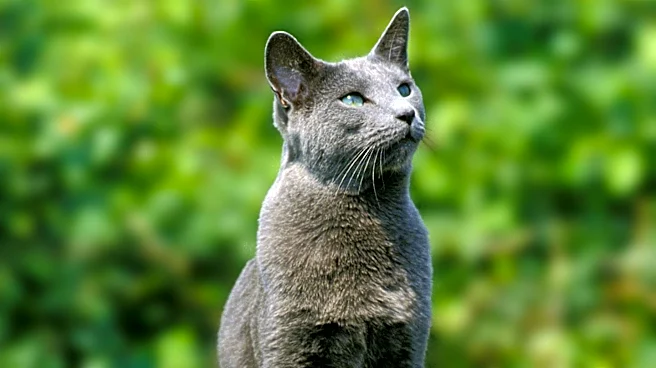






The Korat cat, a natural breed originating from Thailand, is renowned for its distinctive silver-tipped blue-grey coat and heart-shaped head. While celebrated for its ancient lineage and unique appearance, the breed also presents interesting genetic considerations, particularly concerning certain inherited health conditions and color variations. Understanding these genetic aspects is crucial for maintaining the health and integrity of the Korat breed,
as well as for appreciating the diversity within its broader genetic family.
Inherited Health Concerns
One of the significant health considerations for the Korat breed is its predisposition to gangliosidosis, specifically gangliosidosis 1 and gangliosidosis 2. These are serious inherited metabolic disorders. The conditions are linked to autosomal recessive mutations in the GBL1 and HEXB genes, respectively. This means that a cat must inherit two copies of the mutated gene (one from each parent) to develop the disease. Breeders are now encouraged to conduct genetic testing to ensure that breeding lines remain free of these inherited diseases, which have historically affected some Korat and Thai breeding populations.
Beyond gangliosidosis, Korat cats have also been observed to develop atherosclerosis conditions, which are typically rare in felines but resemble human atherosclerosis. In these cases, a genetic predisposition is assumed to be the underlying cause, rather than external factors or medical treatments. This highlights the importance of ongoing research into the breed's genetic makeup to better understand and mitigate such health risks, ensuring the long-term well-being of Korat cats.
Color Variations and Related Breeds
While the traditional Korat is exclusively recognized for its silver-tipped blue-grey coat, genetic variations have led to the emergence of other Korat-type cats. The Governing Council of the Cat Fancy, for instance, recognizes these variations on its experimental register. These include the Thai Lilac, which is a solid lilac color, and the Thai Blue Point and Thai Lilac Point, both of which exhibit the colorpoint pattern seen in Siamese cats. The Thai Lilac Point, in particular, also carries the Chocolate gene.
These color variations arose when new Korat breeding stock carrying recessive genes for these colors was imported from Thailand. The first recorded Thai Lilac kitten, named "Jenanca Lilac Lillee," was born in the U.K. in 1989 to two Korat parents. Subsequent re-matings of these parents and other Korats led to more lilac kittens, allowing for further development of this color without excessive inbreeding. Similarly, the first recorded Thai Lilac Point, Clairabelle Pixie Dust, was born in 2014, also from two Korat parents in the U.K., followed by another, Clairabelle Ninja Rococoa, from the same parents.
It is important to distinguish these Korat-type cats from the Thai cat, which is a new name for the original or traditional Siamese cat type. The Thai cat typically has a rounder face and a thicker body compared to the modern, "ultra-typed" Siamese. The policy for full registration of Korats strictly allows only blue cats from fully registered parents or third-generation supplementary-registered parents, emphasizing the preservation of the traditional Korat appearance while acknowledging the existence of these genetically related, yet distinct, Thai variations.