







Seabiscuit, a champion thoroughbred racehorse, faced a significant challenge in his career when he sustained a severe injury. This setback, a ruptured suspensory ligament in his front left leg, led many to believe his racing days were over. However, the story of Seabiscuit is one of remarkable resilience, not just for the horse, but also for his jockey, Red Pollard, who was simultaneously recovering from his own debilitating injuries. Their parallel
journeys back to health and the racetrack captured the public's imagination, transforming a potential end into an inspiring new chapter.
The injury occurred during a race, with jockey George Woolf noting that he felt the horse stumble. While not life-threatening, the diagnosis was serious enough to cast doubt on Seabiscuit's future in competitive racing. During his convalescence, Seabiscuit was retired to stud for a period in the spring of 1939, covering seven of owner Charles Howard's mares, all of whom produced healthy foals the following spring. This temporary shift in role underscored the uncertainty surrounding his return to the track, as his team, including trainer Tom Smith, focused on other horses like Kayak II.
A Jockey's Parallel Recovery
Red Pollard, Seabiscuit's regular jockey, had suffered a terrible fall earlier in 1938, resulting in a caved-in chest. His recovery was arduous, bringing him to the brink of alcoholism due to poverty and his injury. Pollard and Seabiscuit convalesced together at Howard's ranch, aided by Pollard's new wife, Agnes, who had nursed him through his initial recovery. Pollard famously joked that they "had four good legs between" them, highlighting their shared struggle and mutual support. A local doctor eventually broke and reset Pollard's leg to aid his recovery, slowly allowing him to regain the confidence to sit on a horse.
Wearing a brace to stiffen his atrophied leg, Pollard began to ride Seabiscuit again, starting with walks and gradually progressing to trots and canters. Howard, delighted by their improvement, eagerly anticipated Seabiscuit's return to racing, though he remained concerned about Pollard's fragile leg. This period of shared recovery forged an even deeper bond between the horse and his rider, a connection that would prove crucial in their future triumphs.
The Road Back to the Track
Throughout the fall and winter of 1939, Seabiscuit's fitness steadily improved. By the end of the year, trainer Tom Smith felt the horse was ready to resume race training, initially with other stable jockeys. However, as the time for Seabiscuit's comeback race approached, Pollard successfully persuaded Howard to allow him to ride. Their first scheduled comeback race, the La Jolla Handicap at Santa Anita on February 9, 1940, saw Seabiscuit scratched due to soft ground, delaying their much-anticipated return.
When they finally raced, Seabiscuit finished third, beaten by two lengths. However, by their third comeback race, the San Antonio Handicap, Seabiscuit was back to his winning ways. He ran away from the field, beating his training partner, Kayak II, by two and a half lengths. Carrying 124 pounds, Seabiscuit equaled the track record for a mile and 1/16, signaling that the champion was truly back. This victory set the stage for one of the most memorable races of his career.
The Santa Anita Handicap Triumph
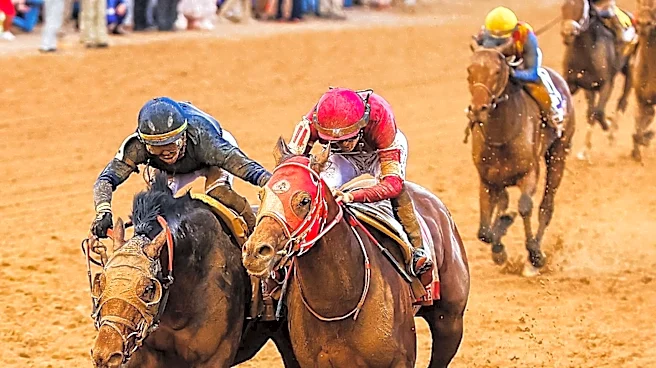
Just a week after the San Antonio victory, Seabiscuit and Kayak II both entered the Santa Anita Handicap, a race with a substantial $121,000 prize. Seventy-eight thousand spectators packed the racetrack, with the majority rooting for Seabiscuit. Pollard faced a challenging start, finding his horse blocked almost immediately. He skillfully navigated through the field, briefly taking the lead. As they thundered down the back straight, Seabiscuit became trapped in third place, behind Whichcee and Wedding Call.
Trusting in Seabiscuit's renowned acceleration, Pollard steered between the leaders, bursting into the lead and securing the firm ground just off the rail. As Seabiscuit unleashed his old surge, Wedding Call and Whichcee faltered. Pollard drove his horse on, winning "The Hundred Grander" by a length and a half from a fast-closing Kayak II, ridden by Leon Haas. The crowd erupted in pandemonium, and it took considerable time for the horse, rider, trainer, and owner to reach the winner's enclosure through the throng of well-wishers. This victory marked a triumphant culmination of their arduous journey back from injury.