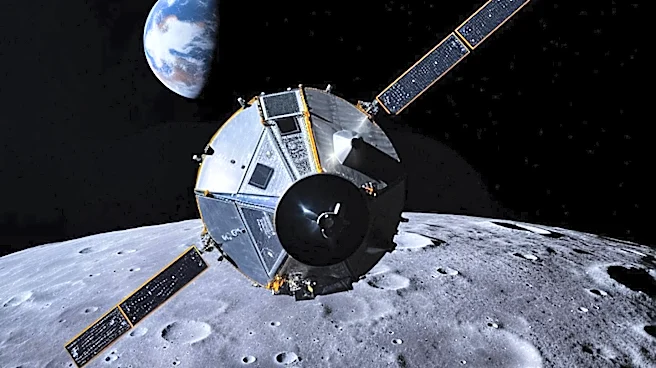








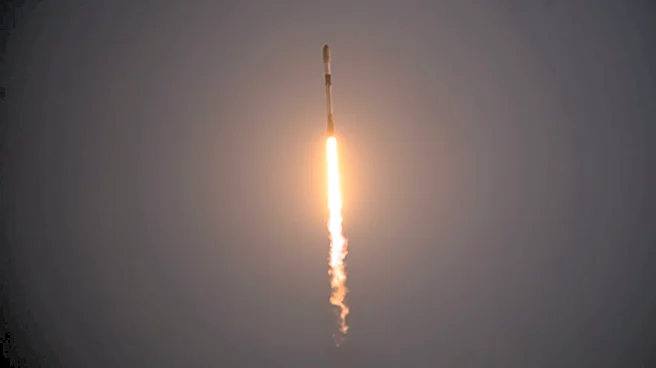
Lunar Orbiter 1 marked a significant milestone in space exploration as NASA's first successful mission to orbit the Moon. Launched in 1966, this robotic spacecraft was part of NASA's Lunar Orbiter program, designed to gather crucial data for future lunar missions. The mission's primary goal was to photograph the Moon's surface to identify potential landing sites for the Apollo and Surveyor missions. Beyond its photographic objectives, Lunar Orbiter 1 also
collected valuable data on the Moon's gravitational field, radiation intensity, and micrometeoroid impacts.
Mission Objectives and Challenges
Lunar Orbiter 1 was launched on August 10, 1966, from Cape Canaveral, Florida, aboard an Atlas SLV-3 Agena-D rocket. The spacecraft's primary mission was to capture high-resolution images of the Moon's surface, focusing on smooth areas that could serve as safe landing sites for future missions. The spacecraft was equipped with a sophisticated camera system developed by Eastman Kodak, which was originally designed for reconnaissance satellites. This system allowed the spacecraft to develop film onboard and transmit the images back to Earth via a video signal.
During its journey to the Moon, Lunar Orbiter 1 faced several challenges. A temporary failure of the Canopus star tracker, likely caused by stray sunlight, and overheating issues were among the problems encountered. The mission team successfully navigated these challenges by using the Moon as a reference for navigation and adjusting the spacecraft's orientation to manage the temperature.
Achievements and Discoveries
Lunar Orbiter 1 successfully entered an elliptical near-equatorial lunar orbit 92.1 hours after launch. The spacecraft's initial orbit had a period of 3 hours and 37 minutes, with an inclination of 12.2 degrees. Over the course of its mission, Lunar Orbiter 1 captured a total of 42 high-resolution and 187 medium-resolution frames, covering more than 5 million square kilometers of the Moon's surface. Despite some early images showing severe smearing, the mission achieved approximately 75% of its intended photographic goals.
One of the most notable achievements of Lunar Orbiter 1 was capturing the first two pictures of Earth from the Moon. These images provided a new perspective on our planet and underscored the interconnectedness of Earth and its celestial neighbor. Additionally, the mission's orbit tracking data revealed a slight "pear-shape" of the Moon based on its gravity field.
Conclusion and Legacy
Lunar Orbiter 1's mission concluded on October 29, 1966, when the spacecraft was intentionally deorbited to avoid interference with the upcoming Lunar Orbiter 2 mission. The mission's early termination was due to a shortage of attitude control gas and other deteriorating conditions. Despite these challenges, Lunar Orbiter 1 provided invaluable data that paved the way for future lunar exploration.
The success of Lunar Orbiter 1 demonstrated the feasibility of orbiting the Moon and capturing detailed images of its surface. This mission laid the groundwork for subsequent lunar missions and contributed to the eventual success of the Apollo program. Lunar Orbiter 1's achievements continue to be celebrated as a testament to human ingenuity and the spirit of exploration.