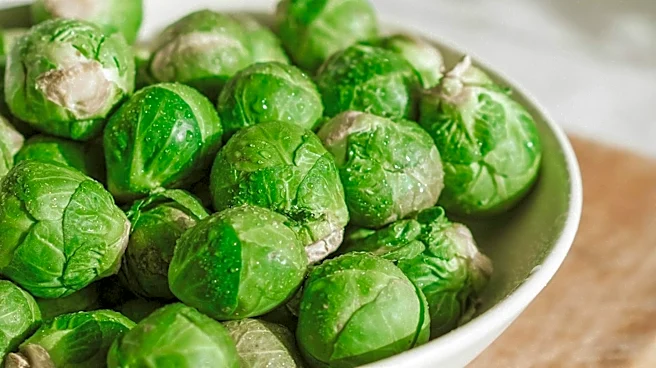








The Brussels sprout, a familiar sight in many kitchens, is more than just a vegetable; it is a fascinating example of botanical diversity and agricultural science. As a member of the Gemmifera cultivar group of Brassica oleracea, it shares a common ancestry with other well-known cruciferous vegetables. Its unique growth pattern, specific environmental needs, and recent scientific breakthroughs in taste modification highlight the intricate relationship
between plant biology and human cultivation. Understanding these aspects provides insight into how this particular vegetable thrives and has evolved.
Botanical Classification and Relatives
Brussels sprouts are classified within the species Brassica oleracea, placing them in the same botanical group as several other popular vegetables. This species includes broccoli, cabbage, collard greens, kale, and kohlrabi. All these plants are part of the Brassicaceae family, historically known as Cruciferae, a term that refers to their cross-shaped flowers. This shared lineage means they possess similar genetic traits and nutritional profiles, though they manifest in distinct physical forms.
The specific cultivar group for Brussels sprouts is "Gemmifera," a name derived from Latin, meaning "bud-bearing." This accurately describes the plant's primary characteristic: the formation of numerous small, edible buds along a central stalk. While the wild ancestors of these cabbage species originated in the Mediterranean region, the specific cultivation of Brussels sprouts for these buds was refined in northern Europe, particularly near Brussels, Belgium, by the 13th century.
Optimal Growing Conditions and Growth Cycle
Successful cultivation of Brussels sprouts relies on specific environmental conditions. They grow best in temperature ranges of 7–24 °C (45–75 °F), with the highest yields achieved when temperatures are consistently between 15–18 °C (59–64 °F). This preference for cooler temperatures explains their prevalence in northern European climates and their traditional status as a winter-stock vegetable in temperate zones, where the harvest season typically runs from September to March.
From planting, fields are ready for harvest within 90 to 180 days. The sprouts themselves develop in a distinctive helical pattern along a long, thick central stalk, which can grow to be 60 to 120 centimeters (24 to 47 inches) tall. These buds mature gradually over several weeks, starting from the bottom of the stalk and progressing upwards. This staggered maturation allows for multiple hand-picking harvests, yielding five to 15 sprouts at a time, or for a single, complete stalk harvest for mechanical processing. Each stalk can produce a substantial amount, ranging from 1.1 to 1.4 kilograms (2.4 to 3.1 pounds), with commercial operations typically yielding about 900 grams (2 pounds) per stalk.
Scientific Advancements in Flavor and Variety
Modern science has played a crucial role in enhancing the appeal of Brussels sprouts. For many years, a bitter taste was a common complaint, limiting their popularity. However, in the 1990s, Dutch scientist Hans van Doorn identified the specific chemical compounds responsible for this bitterness: sinigrin and progoitrin. This discovery was a turning point.
Armed with this knowledge, Dutch seed companies were able to embark on targeted breeding programs. They cross-bred older varieties known for their low bitterness with modern, high-yield varieties. This selective breeding over time resulted in Brussels sprouts that were significantly less bitter and, consequently, much more popular with consumers. Beyond flavor, genetic diversity has also led to new varieties, including purple Brussels sprouts like 'Ruby Crunch' or 'Red Bull'. These purple types are hybrids developed by a Dutch botanist in the 1940s, combining traits from purple cabbage with green Brussels sprouts to offer both unique color and increased sweetness.