





Aerial yoga, a distinctive hybrid practice that merges traditional yoga poses with elements of Pilates and dance, has seen significant development since its inception. This innovative form of exercise utilizes a specialized hammock, allowing practitioners to explore traditional asanas in new dimensions. The journey of aerial yoga from its early conceptualization to its current widespread adoption highlights a fascinating blend of athletic performance
and mindful movement, attracting a diverse range of enthusiasts seeking both physical challenge and therapeutic benefits.
Origins and Early Development
The roots of what is now known as aerial yoga can be traced back to Michelle Dortignac, who developed the practice in 2006. Dortignac's vision was to combine established yoga postures with Pilates and dance, all facilitated by the unique support and challenge offered by a hammock. This initial development laid the groundwork for a new approach to physical fitness and mindfulness, distinguishing itself through its innovative use of equipment and its multi-disciplinary foundation. Her work marked a pivotal moment, introducing a novel way to engage with yoga principles.
Following Dortignac's pioneering efforts, the concept quickly gained traction, leading to the emergence of multiple aerial yoga brands by 2009. Florie Ravinet introduced Fly Yoga, Rafael Martinez developed AeroYoga, and Carmen Curtis founded AIReal Yoga. These brands each contributed to the diversification and popularization of aerial yoga, demonstrating the growing interest and varied interpretations of the practice. The rapid proliferation of these distinct brands within a few years underscores the appeal and adaptability of the aerial yoga concept.
The Role of AntiGravity Fitness
While various brands contributed to the rise of aerial yoga, the AntiGravity Fitness brand, founded by Christopher Harrison in 2007, also played a significant role. AntiGravity Fitness claims to have created what became known as aerial yoga, adapting a hammock from aerial arts for yoga purposes. This claim is supported by the fact that AntiGravity had been in existence since 1990, initially as a performance company composed of athletes and acrobats. This background in performance arts provided a strong foundation for integrating aerial techniques into a fitness context.
The transition of AntiGravity from a performance company to a fitness brand highlights a broader trend of incorporating acrobatic and aerial elements into mainstream exercise. The specialized hammock, capable of supporting up to 300 kilograms, was a crucial innovation that made these practices accessible and safe for a wider audience. The development of such robust equipment was essential for the evolution of aerial yoga, allowing for a variety of poses and movements that would be impossible without secure support. This adaptation of aerial arts equipment for yoga marked a significant step in the practice's journey.
The Hammock: A Core Component
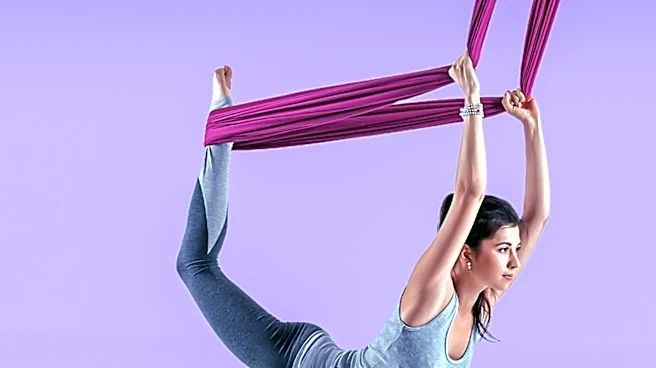
The specialized hammock is central to aerial yoga, acting as a versatile prop that enables a wide range of movements and poses. This rig typically includes support chains, a webbing strap, a silk hammock, and carabiners, all designed to ensure safety and stability. The installation of the hammock can vary, with options for either two anchor points for increased stability or one anchor point for a greater range of motion. This flexibility in setup allows practitioners to customize their experience based on their skill level and desired outcomes.
The hammock's design allows it to function like a swing, providing support for the hips during forward bends and backbends. This support can make difficult mat-based yoga postures more accessible, enabling practitioners to achieve deeper stretches and inversions with greater ease. Furthermore, the inherent movement of the hammock adds an dynamic element to the workout, contributing to the variety and challenge of aerial yoga. This innovative use of a prop not only enhances the physical benefits but also adds an engaging dimension to the practice.