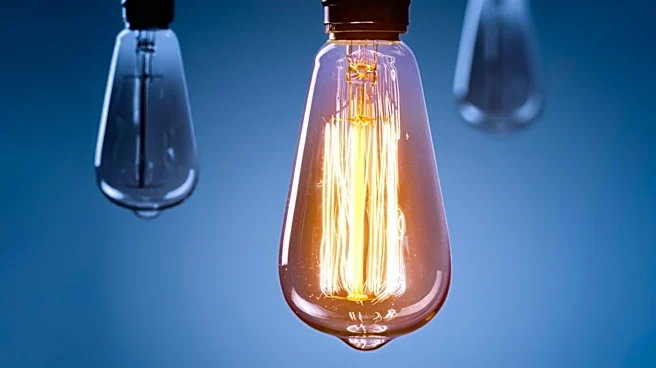




The Edison Illuminating Company, founded by the visionary Thomas Edison, played a pivotal role in bringing electric power to the masses in the United States. Its most famous achievement was the establishment of the Pearl Street Station in Manhattan, which opened its doors on September 4, 1882. This station was not merely a power generator; it was the nation's first commercial power plant and the world's first cogeneration plant, marking a monumental
shift in energy distribution. The company's efforts at Pearl Street laid the groundwork for the modern electrical utility industry, demonstrating the practical application and commercial viability of electric lighting and power.
The Genesis of Commercial Electricity
The Pearl Street Station, located at 257 Pearl Street, was the flagship project of the Edison Illuminating Company. It began operations with six 100-kilowatt dynamos, designed to serve an initial customer base of 82, providing power for 400 lamps. The electricity was supplied as 110-volt direct current (DC). The rapid success and demand for this new service were evident as, by 1884, the station was illuminating 10,164 lamps for 508 customers. This swift expansion underscored the public's eagerness to embrace electric power and the company's ability to meet that demand.
Initially, the station faced technical challenges with its power generation. The custom-made Porter-Allen high-speed steam engines, intended to provide 175 horsepower at 700 rpm, proved to be unreliable due to their sensitive governors. The Edison Illuminating Company quickly adapted, replacing these engines with more suitable ones from Armington & Sims. This adaptability was crucial in ensuring the continuous and stable operation of the plant, which was essential for building public trust and expanding the commercial reach of electricity.
Building the First Urban Electrical Network
The Edison Illuminating Company's work at Pearl Street extended beyond just generating power; it involved creating an entirely new infrastructure for distribution. The station served what was known as the "First District" in Manhattan, an area bounded by Spruce Street, the East River, Wall Street, and Nassau Street. Within this district, the company pioneered the world's first underground urban electrical network. This innovative approach to laying cables beneath the city streets was a significant engineering achievement, protecting the system and integrating it seamlessly into the urban environment.
This pioneering effort established a model for future urban electrification projects. The company's success in Manhattan demonstrated that centralized power generation and a distributed network could reliably deliver electricity to a dense urban population. The historical importance of this district is further highlighted by the presence of other early power stations, such as the Excelsior Power Company Building, indicating a concentrated effort to electrify this vital part of New York City.
Evolution and Enduring Legacy
The original Pearl Street Station met an unfortunate end when it burned down on January 2, 1890. Only one dynamo survived the fire, a testament to the destructive power of the blaze, and it is now displayed at the Henry Ford Museum. Despite this setback, the station was rebuilt and continued operations until 1895, when it was decommissioned due to the emergence of larger and more efficient power plants in the vicinity. However, the Edison Illuminating Company's story did not end there.
In 1901, the Edison Illuminating Company was acquired by Consolidated Gas. As electricity sales began to significantly outpace gas sales, the company underwent a name change in 1936, becoming Consolidated Edison. Today, Con Edison stands as a multi-billion dollar enterprise, providing power to approximately 3.3 million people. It is important to note that while Thomas Edison founded the Edison Illuminating Company, it did not evolve into General Electric; these were distinct entities, though sharing a common founder. The legacy of the Edison Illuminating Company, through its pioneering work at Pearl Street Station and its transformation into Con Edison, continues to power a significant portion of New York, a direct continuation of Edison's vision for a world lit by electricity.