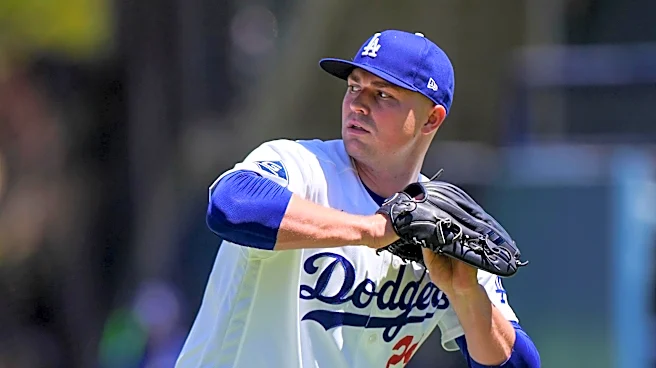


Sandy Koufax, often referred to as "the Left Arm of God," carved out a legendary career in Major League Baseball despite its relatively short duration. Playing for the Brooklyn and later Los Angeles Dodgers from 1955 to 1966, Koufax became synonymous with pitching excellence, accumulating an impressive array of awards and setting numerous records. His period of dominance, particularly from 1961 to 1966, established him as one of the greatest pitchers
of all time. However, this era of unparalleled success was ultimately cut short by chronic pain in his pitching elbow, leading to his retirement at the young age of 30.
The Rise to Unprecedented Dominance
After an inconsistent start to his career, Sandy Koufax made crucial adjustments before the 1961 season, which marked the beginning of his transformation into a dominant force. From 1961 to 1966, he was an All-Star in each of his last six seasons. During this period, he consistently led the National League (NL) in key pitching categories. He topped the NL in earned run average (ERA) for five consecutive years, in strikeouts four times, and in wins and shutouts three times each. His performance was so exceptional that he became the first pitcher in the live-ball era to achieve an ERA below 2.00 in three different qualifying seasons. Furthermore, he was the first in the modern era to record a 300-strikeout season three times, showcasing his incredible ability to overpower hitters.
Koufax's individual accolades during this era were extensive. He was the first three-time winner of the Cy Young Award, and notably, each of these wins was unanimous. This achievement is particularly significant because, at the time, a single Cy Young Award was given for both leagues, making his unanimous selections even more remarkable. In 1963, he was also named the National League Most Valuable Player, further cementing his status as the league's premier player.
World Series Heroics and Iconic Moments
Koufax's dominance extended to the postseason, where he played a pivotal role in the Dodgers' success. He was a key contributor to the Dodgers' World Series championships, earning the World Series Most Valuable Player Award twice, in 1963 and 1965. His ability to perform under the highest pressure was evident in these championship series, where he delivered memorable performances that helped secure titles for his team.
One of the most iconic moments of his career, and indeed in baseball history, occurred during the 1965 World Series. Koufax famously chose not to pitch Game 1 because it fell on Yom Kippur, a significant Jewish holiday. This decision resonated deeply within the Jewish community and beyond, making him an important role model and a hero for many. Despite sitting out the first game, he returned to pitch brilliantly in the series, ultimately leading the Dodgers to victory.
The Painful Decision: Retirement at 30
Despite his extraordinary success, Koufax's career was cut short by chronic pain in his pitching elbow. The relentless strain of his powerful pitching motion took a severe toll on his arm. By the end of the 1966 season, the pain had become debilitating, making it impossible for him to continue pitching at the elite level he had established. Faced with the prospect of permanent damage and a diminished quality of life, Koufax made the difficult decision to retire at the age of 30.
His retirement shocked the baseball world, as he was at the peak of his powers. However, his decision was a testament to his integrity and his commitment to his long-term health. Just six years after his retirement, in 1972, Sandy Koufax was elected to the Baseball Hall of Fame at the age of 36, making him the youngest player ever to receive this honor. His number 32 was retired by the Dodgers in the same year, and a statue honoring him was unveiled at Dodger Stadium in 2022, cementing his enduring legacy as one of baseball's all-time greats.