



The Susan B. Anthony dollar, intended to honor a pivotal figure in American women's rights, faced an overwhelmingly negative reception from the public almost immediately upon its release. Introduced on July 2, 1979, this new dollar coin was designed to be a convenient alternative to the dollar bill. However, its physical characteristics, particularly its similarity in size and material to the Washington quarter, led to widespread confusion in everyday
transactions. This initial public dissatisfaction set the stage for a challenging existence for the coin, ultimately leading to its suspension of production for general circulation and a later, unexpected reissue.
Initial Release and Public Confusion
The first Susan B. Anthony dollars were minted in late 1978 and early 1979, with the Philadelphia Mint striking its first coins on December 13, 1978, followed by the Denver and San Francisco Mints in January 1979. Anticipating that the coins might be hoarded, mint officials created a substantial stockpile of 500 million coins before the official release. Each coin bore a mint mark indicating its origin: 'P' for Philadelphia, 'D' for Denver, and 'S' for San Francisco. Notably, the Anthony dollar was the first coin since the World War II-era Jefferson nickel to carry a 'P' mint mark, as other coins struck in Philadelphia typically lacked one to denote their origin. In 1980, the 'P' mint mark was extended to all other circulating coins, except the cent, struck in Philadelphia.
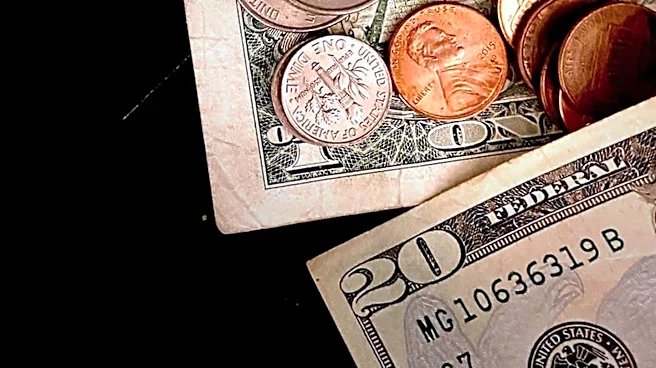
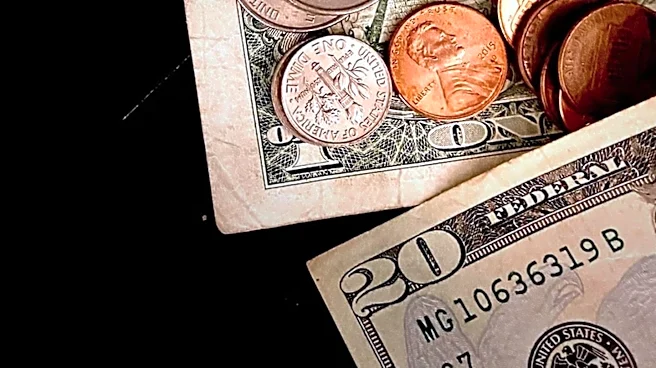
Despite a $655,000 marketing campaign by the Treasury Department and the Federal Reserve, aimed at educating bank employees and the public, and a $100 million effort by the vending industry to adapt machines, the coin's reception was largely negative. A 1979 survey revealed that 66% of the national population disliked the coin. The primary issue was its close resemblance to the quarter; it was less than two millimeters larger in diameter and made of the same copper-nickel composition. This led to frequent mix-ups in transactions, frustrating both consumers and businesses. Mint Director Stella Hackel acknowledged the difference in weight and design but believed the public would eventually grow accustomed to it, suggesting it would become "customary to the American people in time." However, complaints continued to mount, and within months, public transportation systems and many establishments began refusing to accept the coins.
Legislative Attempts and Production Halt
The widespread public dissatisfaction prompted legislative action. On July 13, 1979, California Representative Jerry Lewis introduced a bill to the House of Representatives proposing an increase in the coin's size to improve identification. Although this bill never passed, Lewis's remarks highlighted the coin's derisive nickname, the "Carter quarter," linking its unpopularity to the then-President. The initial production of 1979-dated dollar coins for circulation totaled 757,813,744 across the three Mints. However, demand remained low, and circulation strikes for 1980 dropped significantly to 89,660,708.
Due to its persistent unpopularity, the production of Anthony dollars for general circulation was suspended. In 1981, a limited mintage of 9,742,000 dollars was struck across all three Mints, exclusively for sale to collectors, marking the end of its initial production run. This halt left the Treasury with a significant dilemma: a surplus of 520,000,000 coins by 1981, a result of striking a large number in anticipation of high public demand. Melting these coins was deemed impractical because the cost of manufacture was approximately 2 cents, and the 98 cents earned from seigniorage (the difference between face value and production cost) was applied to the national debt. Melting them would have added this seigniorage amount back to the debt. Consequently, the vast surplus of coins was placed in government storage, to be distributed only as needed.
Unexpected Reissue and Legacy
Despite their transactional unpopularity, Susan B. Anthony dollars found an unexpected niche in the early 1990s. They began to see heavy use in over 9,000 stamp-dispensing machines in United States Postal Service buildings nationwide. Additionally, mass-transit systems and vending machine operations started using them regularly. By the mid-1990s, the Treasury's stockpiles of Anthony dollars, which had totaled approximately 229,500,000 coins in February 1996, were significantly depleted, dropping to about 133,000,000 by the end of 1997.
Faced with the necessity of striking more Susan B. Anthony dollars to meet this renewed demand, the Treasury supported legislation for a new dollar coin that would not be confused with the quarter. This led to the passage of the United States $1 Coin Act of 1997, which authorized the creation of the Sacagawea dollar, a gold-colored coin with a plain edge. However, the act also allowed for the temporary resumption of striking the Anthony design as a stopgap measure until the new Sacagawea dollars could enter production. On May 20, 1999, the U.S. Mint announced that production of the Susan B. Anthony dollar would resume. In total, 41,368,000 Anthony dollars dated 1999 were struck for circulation, primarily at the Philadelphia and Denver Mints. The Anthony design was officially retired in 2000 with the introduction of the Sacagawea dollar. The coin's design also had an interesting repercussion in Canada; when Canada introduced its new one-dollar coin in 1987, its dimensions were made similar to the Susan B. Anthony dollar to allow for common vending machine specifications between the two nations. The Baltimore Metro, upon its opening in 1984, became the largest single user of Susan B. Anthony dollar coins, utilizing them as tokens for ticket purchases.