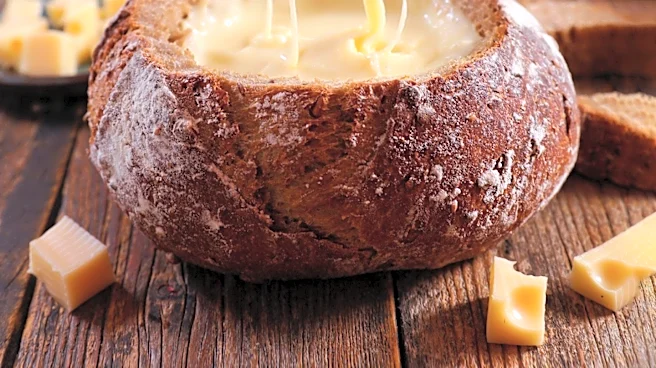






Fondue, a Swiss dish of melted cheese and wine, is widely recognized today as a symbol of Swiss identity and hospitality. However, its journey to this esteemed status is a fascinating tale rooted in necessity, resourcefulness, and strategic marketing. What began as a practical solution for Alpine communities facing harsh winters and limited fresh food evolved over centuries into a communal dining experience, eventually becoming a powerful emblem of Swiss unity
and culture.
Early Beginnings and Practicality
The origins of fondue can be traced back to the Alpine regions of Switzerland, where geographic isolation and severe winters presented significant challenges for food preservation. Communities in these areas relied heavily on preserved staples such as aged cheese and stale bread. Rather than allowing these valuable ingredients to go to waste, people developed ingenious methods to make them more palatable and nutritious. By melting cheese and blending it with wine, they created a warm, flavorful dish that not only softened hardened bread but also provided a crucial source of calories during the colder months.This early approach to fondue was not driven by culinary sophistication but by sheer necessity and resourcefulness. The practice of melting cheese and combining it with wine predates the first widely recognized recipe, suggesting that this method of food preparation was common long before it was formally documented. The earliest known recipe for a cheese-and-wine preparation appeared in a 1699 Zurich cookbook, under the name "Käss mit Wein zu kochen" ('to cook cheese with wine'). This recipe called for grated or cut-up cheese to be melted with wine, with bread then dipped into the mixture.
Evolution of the Dish and Name
Interestingly, the term "cheese fondue" until the late 19th century referred to a different dish altogether. It was a preparation composed of eggs and cheese, resembling something between scrambled eggs with cheese and a cheese soufflé. Variations of this earlier "fondue" included cream and truffles, in addition to eggs. The first known recipe for the modern cheese fondue, featuring cheese and wine but no eggs, was published in 1875. This version was already presented as a Swiss national dish, indicating a shift in its identity and recognition.Despite its modern association with rustic mountain life, the early modern cheese fondue was more of a town-dweller's dish from the lowlands of western, French-speaking Switzerland. Rich cheeses like Gruyère, which are central to fondue, were valuable export items that peasants typically could not afford to eat. A significant development in fondue's preparation came with the introduction of corn starch to Switzerland in 1905. This ingredient made it much easier to create a smooth and stable emulsion of wine and cheese, likely contributing to the dish's growing success and appeal.
National Promotion and Cultural Icon
Fondue's transformation into a true national symbol was largely a result of a concerted marketing campaign by the Swiss Cheese Union (Schweizerische Käseunion). In the 1930s, the Union aggressively promoted fondue as a Swiss national dish to boost cheese consumption. The 1939 New York World's Fair served as the first international platform for the Swiss Cheese Union to showcase fondue to a global audience. As part of the "spiritual defense of Switzerland," the Union also created pseudo-regional recipes, further embedding fondue into the national consciousness.After World War II rationing ended, the marketing efforts continued. The Swiss Cheese Union sent fondue sets to military regiments and event organizers across Switzerland, solidifying its place in Swiss culture. Today, fondue is widely regarded as a symbol of Swiss unity and is often associated with mountains and winter sports, reflecting its historical roots and the romanticized image of Alpine life. The decades-long cheese campaign in Switzerland concluded in 1999 with the disbandment of the Swiss Cheese Union due to corruption scandals and economic changes. However, the legacy of fondue as a symbol of national unity remains deeply woven into the modern Swiss identity, a testament to its enduring cultural impact.
Fondue's Global Reach and Modern Interpretations
The term "fondue" expanded beyond its original cheese and wine form in the 1950s, particularly in New York. Swiss restaurateur Konrad Egli introduced fondue bourguignonne at his Chalet Suisse restaurant in 1956, which involved dipping meat into hot oil. In the mid-1960s, Egli also invented chocolate fondue as a promotion for Toblerone chocolate, featuring melted chocolate, heavy cream, and brandy. This sweet variation gained significant popularity in the 1970s in New York, prompting many people to purchase fondue pots for home use and further increasing the dish's overall recognition.Fondue was again promoted to Americans at the Swiss Pavilion's Alpine restaurant during the 1964 New York World's Fair. Its popularity in the United States peaked in the 1960s and 1970s, often served at social gatherings and dinner parties. Back in Switzerland, the Swiss Cheese Union continued its aggressive promotion with slogans like "La fondue crée la bonne humeur" ('fondue creates a good mood') and the catchy Swiss German phrase "Fondue isch guet und git e gueti Luune" ('fondue is good and creates a good mood'), abbreviated as "figugegl." This widespread promotion cemented fondue's place not just as a meal, but as an experience associated with good times and togetherness, a sentiment captured by Betty Crocker in 1970: "A fondue party can be great fun."