


Steven Spielberg's 1971 film *Duel* is a masterclass in suspense, employing a unique blend of narrative and visual techniques to create a gripping psychological thriller. The film, which follows businessman David Mann as he is terrorized by an unseen truck driver on a desolate highway, transcends its simple premise through meticulous direction and a focus on the protagonist's escalating fear. Spielberg's approach to storytelling in *Duel* is characterized
by a linear narrative, a carefully controlled perspective, and a gradual escalation of tension, all designed to immerse the audience in Mann's terrifying ordeal.
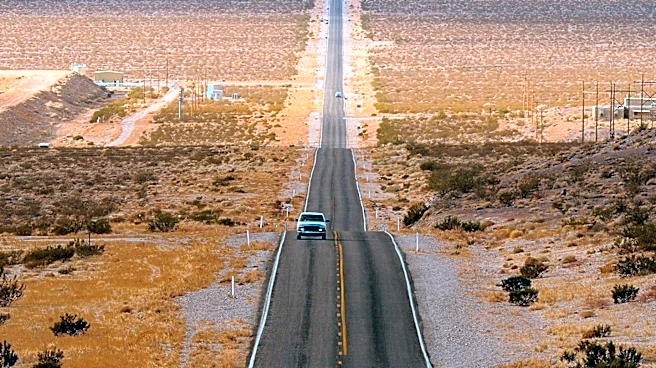
The narrative style of *Duel* is notably linear, unfolding along a dusty Californian desert highway. The film opens with a 3-minute, 15-second shot from David Mann's garage in Los Angeles to a lonely desert highway, maintaining a bumper-level perspective. This initial sequence, cut 15 times, establishes a sense of calm and continuity before the terror begins. The first encounter with the tanker truck occurs at the 4-minute, 45-second mark, immediately introducing the element of an unseen, menacing force. Spielberg masterfully manipulates the audience's perspective, often limiting it to Mann's point of view, making the viewer as surprised and disoriented as the protagonist.
Crafting Suspense Through Limited Perspective and Escalation
One of the most effective narrative devices in *Duel* is the deliberate limitation of the audience's perspective. For instance, when Mann and the truck stop at a gas station, the audience shares Mann's restricted view, unable to see the truck driver. Spielberg enhances this by having the gas station attendant spray cleaning fluid on the windshield, further obscuring a clear view. Later, as Mann removes his glasses to clean them, the truck driver exits on the passenger side, revealing only his cowboy boots. This technique ensures that the identity of the antagonist remains a mystery, amplifying the sense of dread and the irrational nature of the threat.
As the film progresses, Spielberg occasionally grants the audience a brief "knowledge advantage" over Mann, intensifying the suspense. For example, the audience sees the truck accelerate aggressively towards Mann before he does, creating a moment of heightened anticipation. This pattern of shared surprise and occasional foreknowledge keeps the audience engaged and on edge. The tension builds through a series of escalating encounters: the truck attempting to push Mann's car into a passing freight train, and the truck deliberately ramming a phone booth Mann is using. Each incident pushes Mann, and by extension the audience, closer to the brink of panic.
The Visual Language of Fear and Isolation
The visual style of *Duel* is as crucial to its impact as its narrative. Spielberg and cinematographer Jack A. Marta employed innovative techniques to convey Mann's confinement and the relentless pursuit. While the opening shot offers a wide, free view, the visual language quickly shifts to emphasize Mann's entrapment within his car. Close-ups of a frantic David Mann are so extreme that he appears to be on the verge of hitting the camera, drawing the viewer intimately into his panicked state. Many shots were captured with a camera mounted on the hood, but most were from a handheld camera operated from the back seat, passenger seat, or floor, further enhancing the sense of claustrophobia.
Spielberg and Marta meticulously planned their shoots to maximize efficiency and visual impact. They scouted 20 to 30 locations per day, often just a few hundred yards apart, to maintain a compressed schedule. At each location, Spielberg, his assistant director Jim Fargo, Marta, and stunt supervisor Carey Loftin would walk the route, planning actions and camera positions. Three cameras were typically set up 100 meters apart along the route, capturing the action as Dennis Weaver and the stunt driver sped past. A fourth camera, often with Spielberg and an operator, was placed inside Weaver's car, focusing on the truck. This multi-camera setup, combined with variations in shot sizes, lenses, and angles, generated a vast amount of diverse footage for editing.
To make the chase sequences appear fast, despite the truck's actual low speed, Spielberg utilized a specialized camera car that could lower the camera to just eight inches above the ground. He also strategically filmed vehicles against prominent rocky cliffs in the background. This, coupled with rotating wheels in the foreground and slightly upward-tilted camera perspectives, created an optical illusion of much higher velocity. The film's editor, Frank Morriss, praised Spielberg's ingenuity, noting how he could use fifteen camera angles of the truck rounding the same curve without the audience noticing, calling the footage "unique" and Spielberg a "brilliant director from the start." The final scene, involving the vehicles plunging into a canyon, was captured by six cameras, including a high-speed camera shooting 600 frames per second, whose excellent footage was used unedited, providing a dramatic and visceral conclusion to Mann's ordeal.