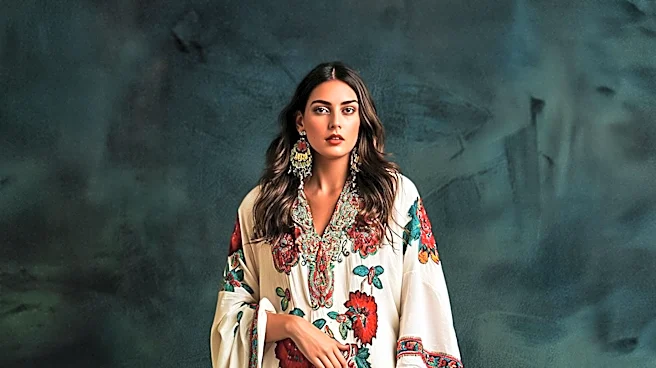








The kaftan, a versatile variant of the robe or tunic, boasts a rich history spanning thousands of years and originating in West Asia. This enduring garment has been embraced by numerous cultures across the globe, adapting its form and function to suit diverse climates and societal roles. From its early presence in the Middle East and North Africa to its distinct interpretations in Russia and West Africa, the kaftan stands as a testament to the enduring appeal
of a comfortable, adaptable, and often symbolically rich piece of clothing.
Origins and Early Spread
The journey of the kaftan began in West Asia, where it emerged as a fundamental garment. Its basic design, a robe or tunic, provided a practical and comfortable solution for various populations. Over centuries, this foundational design traveled and was inherited by cultures throughout Asia, influencing dress in regions as far-reaching as Russia, the Middle East, and North Africa. This widespread adoption highlights the kaftan's inherent versatility and its ability to integrate into different cultural contexts.
During the Islamic Golden Age of the Abbasid era, the kaftan's influence expanded significantly. Caliphs of this period wore elegant kaftans, sometimes crafted from silver or gold brocade and featuring buttons down the front of the sleeves. For instance, Caliph al-Muqtaddir (908–932) was known to wear a kaftan made from silver brocade Tustari silk, and he had a similar one made for his son from richly decorated Byzantine silk. This era saw the kaftan spread widely, becoming known throughout the Middle East and North Africa, even reaching the streets of Guangzhou during the Tang dynasty era.
Materials and Ottoman Influence
The materials used to create kaftans have varied widely, reflecting both local resources and the garment's intended purpose. Common fabrics include wool, cashmere, silk, or cotton. Often, a sash would be worn with the kaftan, adding to its aesthetic and functional design. The choice of material could also signify status or occasion, with more luxurious fabrics reserved for important individuals or events.
One of the most prominent periods for the kaftan was during the Ottoman Empire. Here, the garment became a symbol of luxury and prestige. Elaborately designed kaftans were frequently bestowed upon ambassadors and other significant guests at the Topkapı Palace, serving as robes of honor. This practice underscored the kaftan's role not just as clothing, but as a diplomatic gift and a marker of respect and importance within the Ottoman court. The Ottoman tradition of bestowing kaftans of honor was even adopted by governors of Algiers, who in turn presented them to Beys and distinguished families.
Diverse Interpretations and Symbolism
Across different cultures, the kaftan took on unique characteristics and meanings. In Russia, the term "kaftan" came to refer to a specific style of men's long suit with tight sleeves, a distinct departure from its more flowing forms elsewhere. This Russian kaftan was a widespread type of outer-clothing among peasants and merchants in Old Russia during the 19th century and is still used today as ritual religious clothing by conservative Old Believers and in Russian folk dress.
Beyond its practical and aesthetic qualities, the kaftan has also served as a powerful symbol. In some cultures, it represented royalty, signifying the wearer's elevated status and authority. The detailed and often luxurious craftsmanship of these garments further reinforced their symbolic importance. The kaftan's ability to adapt to various climates, from warm regions where it was worn as a lightweight, loose-fitting garment to its use as a more structured suit, demonstrates its remarkable versatility and enduring presence in global fashion history.