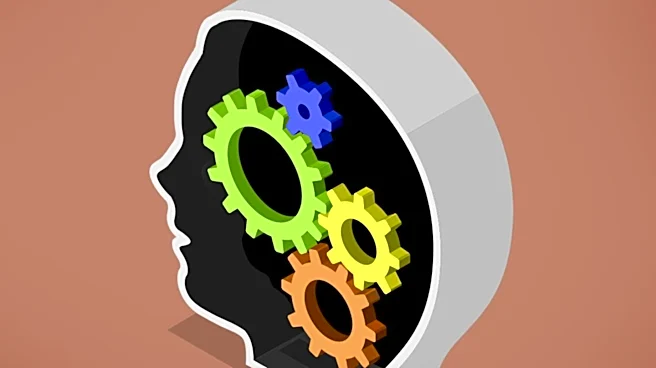

Priming is a fundamental concept in psychology and psycholinguistics that describes how exposure to one stimulus can influence a person's response to a subsequent stimulus, often without conscious awareness
or intention. This effect can be either positive, speeding up processing, or negative, slowing it down. The core idea is that an initial stimulus, known as the prime, prepares the brain to process a second, related stimulus, called the target, more efficiently or less efficiently depending on the nature of the priming.
This phenomenon is not always consciously perceived, meaning that individuals may not be aware that an earlier stimulus is affecting their current thoughts or actions. For instance, the word "nurse" might be recognized more quickly after seeing the word "doctor" than after seeing the word "bread," because "doctor" semantically primes the concept of "nurse." The effectiveness of priming is often greatest when the prime and target stimuli are in the same modality, such as visual cues for visual priming or verbal cues for verbal priming, though cross-modal priming can also occur.
The Mechanics of Positive and Negative Priming
Positive priming is generally understood to be caused by a process called spreading activation. When the first stimulus is encountered, it activates certain parts of a specific representation or association in memory. This partial activation means that when the second stimulus appears, less additional activation is needed for an individual to become consciously aware of it, thus speeding up processing. This effect can happen even if the prime is not consciously perceived, highlighting the unconscious nature of much priming.
Negative priming, on the other hand, is more complex to explain. It occurs when experiencing a stimulus and then ignoring it, which subsequently slows down processing for that same stimulus if it later becomes a target. Several models attempt to explain negative priming, with the distractor inhibition and episodic retrieval models being the most widely accepted. The distractor inhibition model suggests that the brain actively inhibits the activation of ignored stimuli. If an ignored stimulus later becomes relevant, the residual inhibition can hinder its processing. The episodic retrieval model proposes that each encounter with a stimulus is stored as an individual episode, complete with a "do-not-respond" tag if it was ignored. When that stimulus is re-encountered as a target, retrieving the old "do-not-respond" tag creates a conflict, causing a delay in response.
Diverse Forms of Priming
Priming manifests in various forms, each with distinct characteristics. Perceptual priming relies on the form of the stimulus and is enhanced when there's a match between early and later stimuli. An example is identifying an incomplete word more easily if you've seen a related image before. Conceptual priming, conversely, is based on the meaning of a stimulus. For instance, the word "table" can conceptually prime the word "chair" because they belong to the same category.
Repetition priming, also known as direct priming, is a form of positive priming where simply experiencing a stimulus makes subsequent experiences of that same stimulus processed more quickly. Semantic priming occurs when the prime and target belong to the same semantic category and share features, like "dog" priming "wolf." Associative priming involves a target word that frequently appears with the prime, even if not semantically related, such as "dog" priming "cat" due to common phrases. Response priming, particularly in visual perception and motor control, involves rapid succession of prime and target coupled to motor responses, where the prime can induce response conflicts. Masked priming uses symbols to diminish the visibility of the prime, making it a tool to investigate automatic activations during visual word recognition. Finally, affective priming involves evaluating stimuli based on an emotional context, where positive or negative primes can influence subsequent evaluations.
Goal Priming and its Influence on Behavior
Beyond basic perceptual and semantic effects, priming can also influence higher-level cognitive processes, such as goal setting and motivation. Goal priming, in the context of work motivation, refers to how stimuli are interpreted based on their relevance to one's goals, thereby influencing perception and behavior. During the pursuit of a goal, objects that are consistent with that goal are often rated more positively than objects irrelevant to the goal. These ratings can even predict subsequent behavior towards those objects.
This suggests that environmental stimuli can unconsciously activate goals and influence actions. For example, individuals exposed to words related to an achievement goal might perform better on an intelligence task compared to those not primed. The activation of these unconscious goals can be flexible, adapting to changing environments. This indicates that priming is not just about speeding up recognition, but can also subtly guide our motivations and actions in goal-directed ways, often without our conscious awareness.