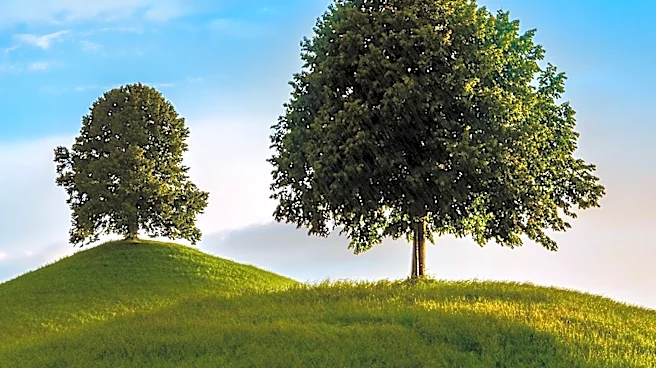







Moses Cleaveland, the founder of Cleveland, Ohio, left a lasting legacy not only through the city that bears his name but also through the living monuments known as the Moses Cleaveland Trees. These trees, which were alive when Cleaveland arrived in the region, serve as a testament to the city's rich history and the enduring impact of its founder. This article explores the significance of the Moses Cleaveland Trees and their role in commemorating
the city's past.
The Origin of the Moses Cleaveland Trees
In 1946, as part of the 150-year anniversary of Moses Cleaveland's arrival at the mouth of the Cuyahoga River, Arthur B. Williams of the Cleveland Museum of Natural History proposed a unique way to honor the city's founder. He suggested identifying and labeling trees that were alive when Cleaveland first came to the region. This initiative aimed to create living monuments that would connect present-day Clevelanders with their city's history.
The project involved nominating trees from various species that were believed to have been standing during Cleaveland's time. Each tree's age was verified, and a list of Moses Cleaveland Trees was compiled. Initially, 242 trees from 23 different species were nominated, but the list was eventually narrowed down to 150 trees that were accessible to the public. Each tree was adorned with a commemorative metal plaque, identifying it as one of the Moses Cleaveland Trees.
The Expansion and Preservation of the Trees
Since the project's inception in 1946, the number of Moses Cleaveland Trees has grown. As some of the original trees have died, new ones have been designated to replace them, ensuring the continuation of this living tribute. As of 2024, there are approximately 270 Moses Cleaveland Trees throughout the Greater Cleveland area.
These trees serve as a reminder of the city's history and the vision of its founder. They are scattered across various locations, providing residents and visitors with opportunities to connect with Cleveland's past. The Moses Cleaveland Trees are not only a symbol of the city's heritage but also a testament to the importance of preserving natural landmarks.
The Cultural and Historical Impact
The Moses Cleaveland Trees have become an integral part of Cleveland's cultural and historical landscape. They offer a tangible link to the past, allowing people to reflect on the city's origins and the contributions of its founder. The trees also highlight the importance of environmental conservation and the role of nature in shaping a city's identity.
Through the Moses Cleaveland Trees, the legacy of Cleveland's founder continues to thrive, reminding future generations of the city's rich history and the enduring impact of one man's vision. These living monuments stand as a testament to the city's resilience and its commitment to preserving its heritage for years to come.