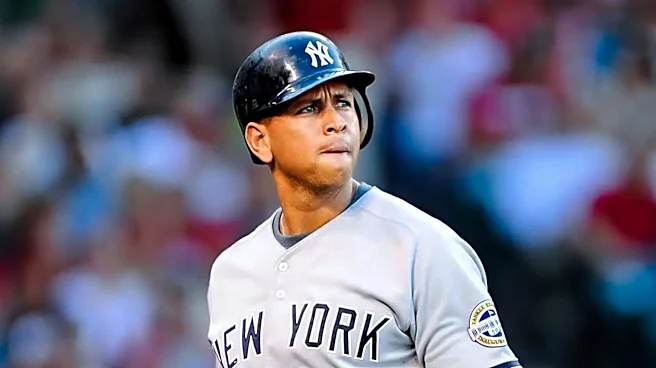



Alex Rodriguez's 2013 Major League Baseball season was marked by a series of significant challenges, including multiple injuries, a highly publicized doping scandal, and a controversial return to the New York Yankees. This period proved to be one of the most tumultuous in his long and decorated career, intertwining his physical struggles with serious allegations that cast a shadow over his performance and reputation. His journey through 2013 was a complex
narrative of rehabilitation, legal battles, and a determined, albeit contentious, effort to remain on the field.
Early Season Setbacks and Rehabilitation Efforts
The year 2013 began with Alex Rodriguez facing a significant physical hurdle. In December 2012, the New York Yankees announced that Rodriguez would undergo arthroscopic surgery to address several issues in his left hip. This procedure was performed on January 16, 2013, setting the stage for a lengthy rehabilitation process that would delay his start to the season.
Rodriguez commenced his rehabilitation assignments on July 2, 2013, playing with the Yankees' Class-A Low affiliate, the Charleston RiverDogs. He continued his recovery by playing for the Yankees' Triple-A team, the Scranton/Wilkes-Barre RailRiders, on July 18. However, his path back to the major leagues was not smooth. Just two days before his anticipated promotion to the Yankees' main roster, Rodriguez sustained a new injury. An MRI revealed a Grade 1 quad strain, which further delayed his return and necessitated continued rehabilitation in the minor leagues. This new setback added to the frustration surrounding his prolonged absence from the team.
The Biogenesis Scandal and MLB Suspension
Amidst his injury recovery, Alex Rodriguez became embroiled in the Biogenesis scandal, a major doping controversy that rocked Major League Baseball. In January 2013, the Miami New Times published reports alleging that Rodriguez and several other MLB players had purchased growth hormone and anabolic steroids from Biogenesis, a clinic in Florida, over the preceding years. Rodriguez initially denied these accusations in a public statement.
However, further reports quickly emerged, intensifying the scrutiny. ESPN published information suggesting that Rodriguez had regularly received assistance with injecting performance-enhancing drugs, even as recently as 2012. Sports Illustrated then claimed to have information indicating that Rodriguez had been prescribed even more unauthorized substances by Biogenesis. These allegations culminated on August 5, 2013, the very day Rodriguez made his return to the Yankees. MLB announced that he would be suspended through the entire 2014 season for his involvement in the Biogenesis scandal. This severe penalty was attributed to his doping history with steroids and his alleged violations of the collective bargaining agreement. Rodriguez, however, appealed the suspension, which allowed him to continue playing until an arbitrator ruled on his appeal.
A Contentious Return and Legal Battles
Alex Rodriguez's return to the Yankees on August 5, 2013, was entirely overshadowed by the simultaneous announcement of his MLB suspension. Despite the cloud of controversy, he continued to play for the remainder of the 2013 season while his appeal was pending. On August 11, Rodriguez hit his first home run of the season, a significant moment that also saw him surpass Stan Musial for fifth place in career RBIs.
His relationship with the Yankees front office became increasingly strained following his return. Rodriguez's lawyers accused the team, and specifically Dr. Christopher S. Ahmad, of mishandling his hip injury. His legal team contended that the Yankees had withheld information about his injury and allowed him to continue playing in 2012 despite his condition. Yankees team president Randy Levine publicly expressed negative comments towards Rodriguez, highlighting the deep rift that had formed. After the season concluded, Rodriguez filed a lawsuit against the doctor who had examined him during the previous year's playoffs and the hospital where the doctor worked. Rodriguez claimed that the doctor failed to detect his left hip injury, which he argued led to the injury worsening and requiring a more invasive surgery than would have otherwise been necessary. His appeal against the MLB suspension was heard after the season, and on November 20, 2013, Rodriguez abruptly left the hearing, issuing a statement denouncing the process as "abusive" and designed for him to fail. He criticized MLB Commissioner Bud Selig for refusing to testify, the league for selecting the arbitrator, and the Players Association for not compelling Selig to face him at the hearing. Ultimately, his suspension was upheld, though later reduced to the entire 2014 season and subsequent playoffs.