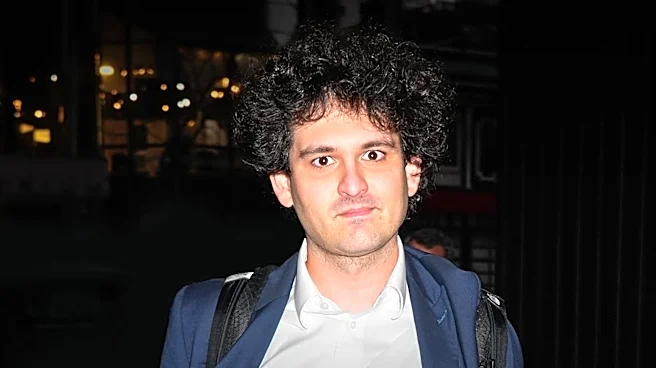






During his federal criminal trial, Sam Bankman-Fried, founder of the now-collapsed cryptocurrency exchange FTX, took the stand to present his defense. His testimony was a critical component of his legal strategy, aiming to counter the prosecution's narrative of fraud and conspiracy. Bankman-Fried's defense centered on themes of shared decision-making, lack of complete awareness regarding certain financial movements, and an overall expression of regret
for the outcomes, rather than an admission of malicious intent. His appearance on the stand followed speculation about whether he would testify, given his attorneys' arguments about restrictions on his ADHD medication hindering his participation.
Key Themes of Bankman-Fried's Testimony
Bankman-Fried's testimony highlighted several key themes. He asserted that other executives within his companies held significant decision-making power, implying a distributed responsibility for the issues that arose. He also claimed to have been unaware of critical information at the time, suggesting that he was not fully privy to the extent of the financial irregularities. For instance, he attributed many of Alameda's problems to the refusal of its CEO, Caroline Ellison, to follow his hedging advice. Furthermore, he stated that former executives Gary Wang and Nishad Singh were responsible for FTX granting Alameda a practically unlimited line of credit.
In general, Bankman-Fried claimed only a vague familiarity with the actual movement of funds between FTX and Alameda until it was too late. He expressed regret, acknowledging that "a lot of people got hurt" due to his mistakes, and maintained that his primary goal had been to "build the best product on the market." This narrative aimed to paint him as an entrepreneur who made errors rather than a deliberate fraudster.
Explaining Financial Mechanisms and Company Policies
Bankman-Fried offered explanations for various financial mechanisms, such as Alameda's "back door" line of credit. He understood that money Alameda borrowed from FTX came from "margin traders" or assets on the exchange earning interest. He stated that FTX did not restrict what users could do with borrowed funds, as long as the risk was managed and assets exceeded liabilities. He also discussed the "fiat@" account, an "omnibus" customer wallet used by FTX for digital assets, which he claimed was a common practice for centralized exchanges. He testified that he "wasn't entirely sure what was happening" with fiat currency initially received via Alameda, believing funds were either held in a bank account or sent to FTX, and that any borrowing by Alameda would be recorded.
The defense also brought up FTX's May 2022 terms of service, which included provisions for clawing back customer balances in certain situations and warned of the high risks of futures trading. Bankman-Fried admitted to having "skimmed over [the terms of service] a few times" and reviewing parts in more detail after release. He confirmed awareness that certain data, including interactions with regulators and business records, needed to be preserved.
Political Donations and Lavish Spending Justifications
Bankman-Fried also addressed his political donations and the company's lavish spending. He stated that he cared about issues like pandemic prevention, believing policy was the most effective way to prepare the world. While admitting a minority of his political donations were related to FTX's business, he denied directing Singh or Ryan Salame to make donations, explaining he hired a political consultant for effective and compliant giving. He claimed these donations were funded by "loans from Alameda."
Regarding the luxurious accommodations in The Bahamas, Bankman-Fried explained that FTX moved there for full licensing in a country with a comprehensive regulatory framework for crypto. He moved into a $30 million apartment to replicate a college living experience with staff and to serve as an "office away from the office." He defended the investment in luxurious housing as a way to incentivize engineers from major tech companies to relocate and work for FTX. He also justified the marketing budget, noting it was a smaller percentage of revenue compared to competitors, and that becoming the "face of the company" was initially accidental but ultimately effective in establishing FTX's presence.