





Abbey Road is more than just a street in London; it's a cultural icon, primarily recognized worldwide for its indelible connection to The Beatles. This thoroughfare, which runs roughly northwest to southeast through St John's Wood in the City of Westminster and the borough of Camden, is part of the B507 road. Its fame stems directly from the Abbey Road Studios, located at number 3, and even more so from featuring on the cover of The Beatles' 1969
album of the same name. This association has transformed a regular London street into a pilgrimage site for music fans and a significant part of the city's tourism circuit.
A Street with Deep Roots
The history of Abbey Road stretches back further than its musical fame. The northwestern end of Abbey Road begins in Kilburn, at the junction with Quex Road and West End Lane. Historically, it was once a track leading to Kilburn Priory and its associated Abbey Farm, indicating its ancient origins. The area began to be developed in the early nineteenth century, gradually transforming from a rural path into a more established road. This historical development laid the groundwork for the street's future, eventually leading to the establishment of the famous recording studios that would bring it global recognition. The street's evolution reflects the broader development of London itself, from historical pathways to modern urban thoroughfares.
The Beatles' Iconic Album Cover and Its Legacy
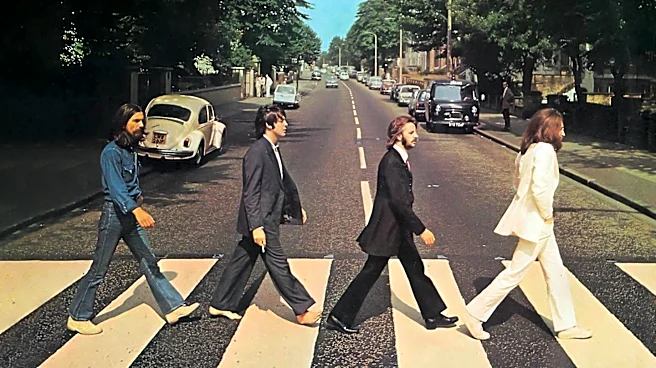
The image of The Beatles walking across the zebra crossing outside EMI Studios on Abbey Road is one of the most recognizable album covers in history. This photograph, taken on August 8, 1969, by Iain Macmillan, was based on ideas sketched by Paul McCartney. Macmillan was given just ten minutes to capture the shot, standing on a step-ladder while a policeman briefly held up traffic. McCartney meticulously reviewed the six photographs taken before selecting the final image, which shows the band walking in single file from left to right, with John Lennon leading, followed by Ringo Starr, Paul McCartney (barefoot and out of step), and George Harrison. This single image transformed the zebra crossing into a global landmark. The white Volkswagen Beetle parked nearby, with its number plate LMW 281F, also became famous, with its plate repeatedly stolen after the album's release. The crossing itself was granted official Grade II listed status by English Heritage in December 2010, acknowledging its cultural significance.
A Tourist Destination and a Local Challenge
As a direct result of its association with The Beatles, this section of Abbey Road has become a prominent feature on the London tourism circuit. The zebra crossing, despite being a busy thoroughfare, is a popular spot for fans to recreate the iconic album cover photo. This popularity, however, comes with its own set of challenges for the local council. The street sign at the corner of Grove End Road and Abbey Road was frequently defaced or stolen, leading to its relocation high up on a building to deter vandals. Additionally, the wall next to the zebra crossing requires repainting every three months to cover the graffiti left by fans. In 2019, to mark the album's 50th anniversary, Thames Water installed a commemorative manhole cover at the crossing site, further cementing its status as a place of cultural pilgrimage. The constant flow of tourists highlights the enduring power of The Beatles' legacy and the street's unique place in popular culture.
The Abbey Road Community and Its Institutions
Beyond the studios and the famous crossing, Abbey Road is also home to other significant institutions and forms part of the local community. The Abbey National Building Society, now known as Santander UK, was founded in 1874 as The Abbey Road & St John's Wood Permanent Benefit Building Society in a Baptist Church on Abbey Road. This demonstrates the street's historical role as a place of community and commerce. Furthermore, Abbey Road is an electoral ward within the City of Westminster, with a population of 11,250 recorded at the 2011 census. This indicates that while it is a global tourist attraction, it is also a living, functioning part of London, with its own local governance and residents. The blend of international fame and local life contributes to the unique character of Abbey Road.