
The human mind often struggles with the true nature of randomness, leading to various cognitive biases when interpreting sequences of events. Two prominent examples of these biases are the hot hand fallacy
and the gambler's fallacy. While both involve incorrect assumptions about random events, they represent opposing expectations regarding streaks. Understanding the distinctions between these two fallacies provides insight into how people perceive and predict outcomes, particularly in sports and games of chance.
Defining the Hot Hand and Gambler's Fallacy
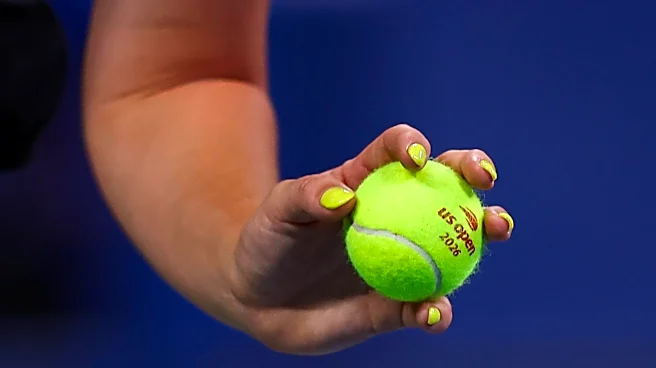
The hot hand fallacy is the belief that a streak of successful outcomes increases the probability of future successes. For instance, in basketball, a player who has made several shots in a row is perceived to have a "hot hand" and is expected to continue their successful streak. This expectation is a positive one, anticipating the continuation of a pattern. The concept is often applied to skill-based tasks where human performance is involved.
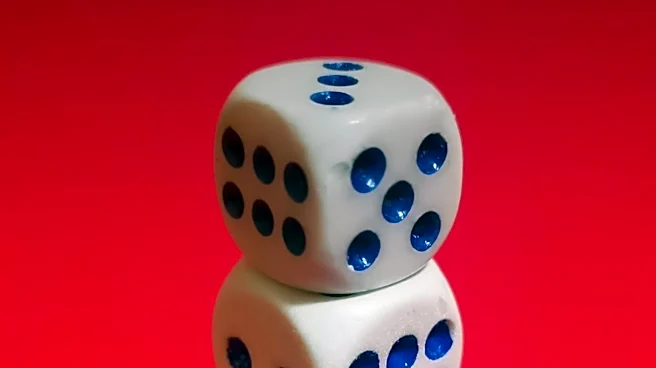
In contrast, the gambler's fallacy is the expectation of a reversal following a run of one outcome. This means that after a series of, say, heads in a coin toss, a person might believe that tails is now "due" to occur. This fallacy is most commonly observed in situations perceived as purely random, such as rolling dice or spinning a roulette wheel. It stems from the false belief that random numbers in small samples should balance out in the same way they do in large samples, a cognitive shortcut known as the law of small numbers heuristic.
Underlying Psychological Mechanisms
The core difference between these two fallacies lies in the direction of the expectation: the hot hand anticipates a run to continue, while the gambler's fallacy expects a run to reverse. Both, however, are rooted in mathematical misconceptions. People often fail to grasp that independent events do not influence each other's probabilities. For example, a coin toss has a 50% chance of landing on heads regardless of previous outcomes. The law of large numbers, which states that the difference between relative frequency and theoretical expectation decreases with more observations, is often misapplied to small sequences, leading to these fallacies.
Proposed explanations for the hot hand fallacy include confirmation bias, where individuals look for and remember streaks, and the clustering illusion, where people misinterpret chance sequences as too "lumpy" to be random. For the gambler's fallacy, the belief that small samples should reflect the long-term probabilities of large samples is a key driver. Both fallacies demonstrate a fundamental human tendency to see patterns and impose order on what are, in reality, random or independent sequences.
Impact on Decision-Making and Perception
The belief in the hot hand can influence real-world decisions, particularly in sports. If teammates or coaches believe a player has a "hot hand," they might pass the ball to that player more frequently. This can inadvertently increase the difficulty of the player's next shot if opponents anticipate this strategy and guard them more closely, potentially lowering their actual success rate. Conversely, in games of chance, the gambler's fallacy can lead individuals to make irrational bets, believing that past outcomes dictate future probabilities, which can result in financial losses.
Interestingly, the context often dictates which fallacy is more likely to be applied. Human performance, especially in skill-based activities, tends to evoke the hot hand belief, as people attribute streaks to skill or momentum. Purely static or mechanical random events, like those in gambling, are more likely to trigger the gambler's fallacy, as people expect a balancing out of outcomes. This highlights how our perception of the source of randomness—human agency versus inanimate chance—shapes our erroneous predictions.